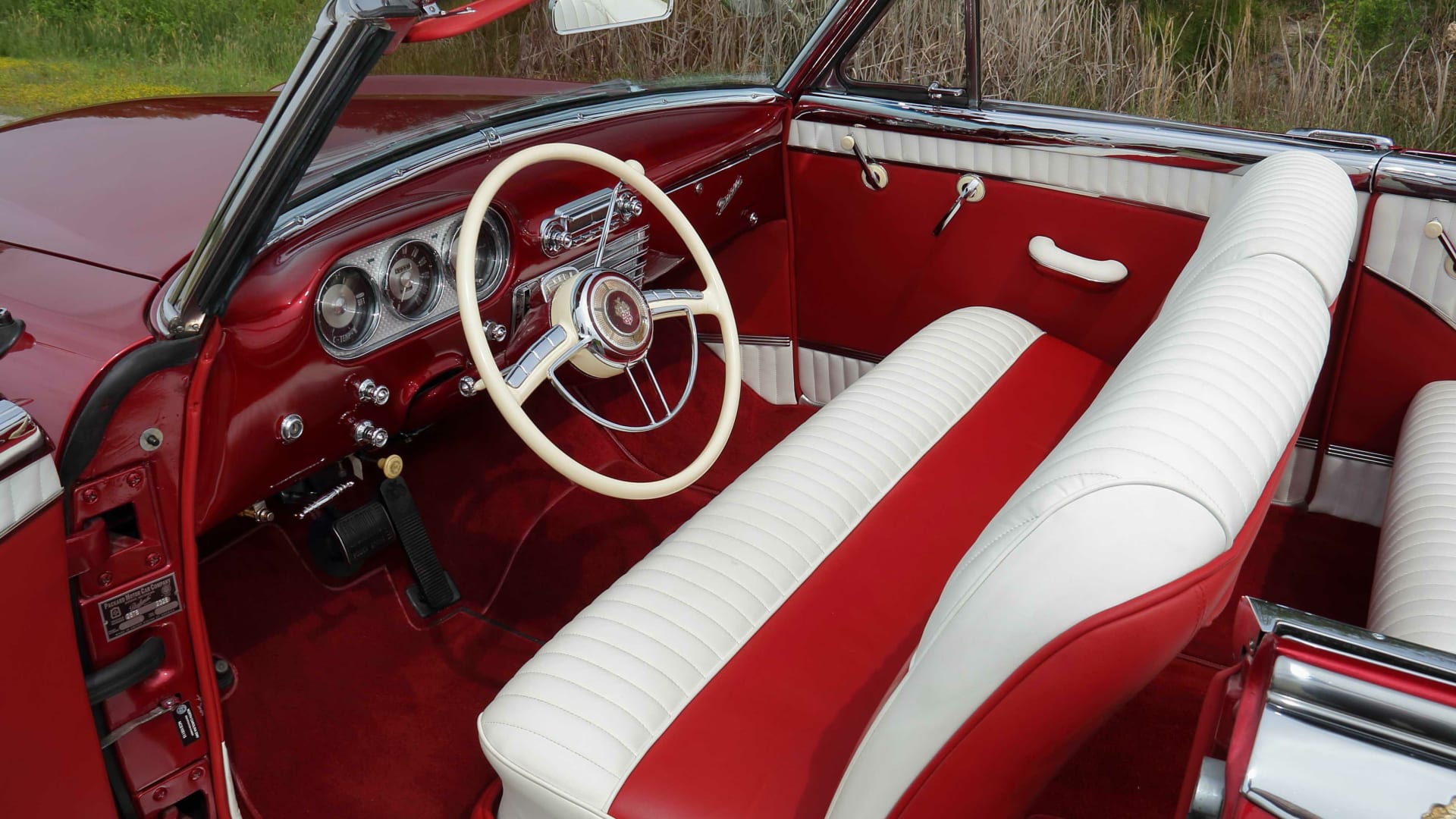
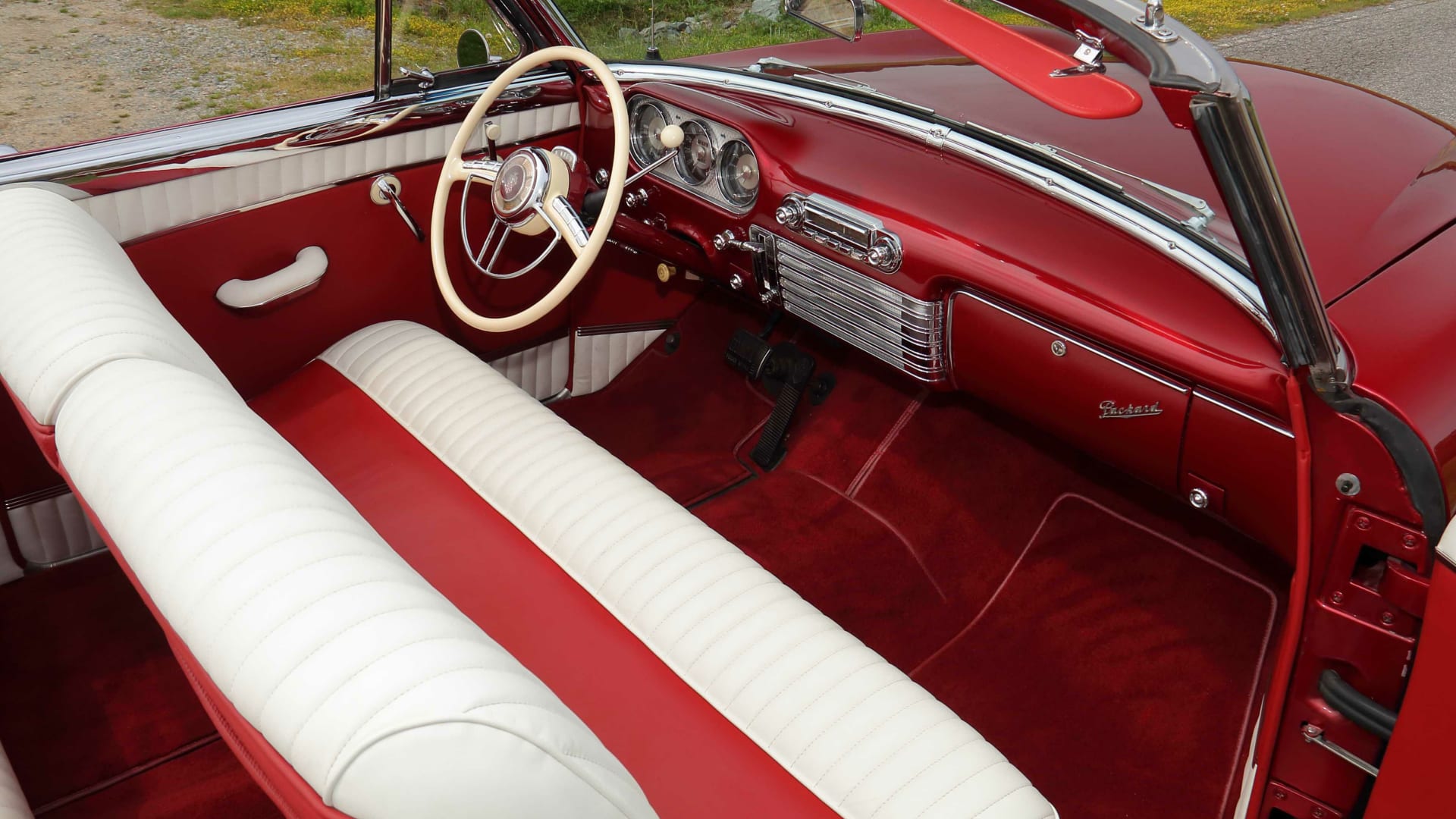
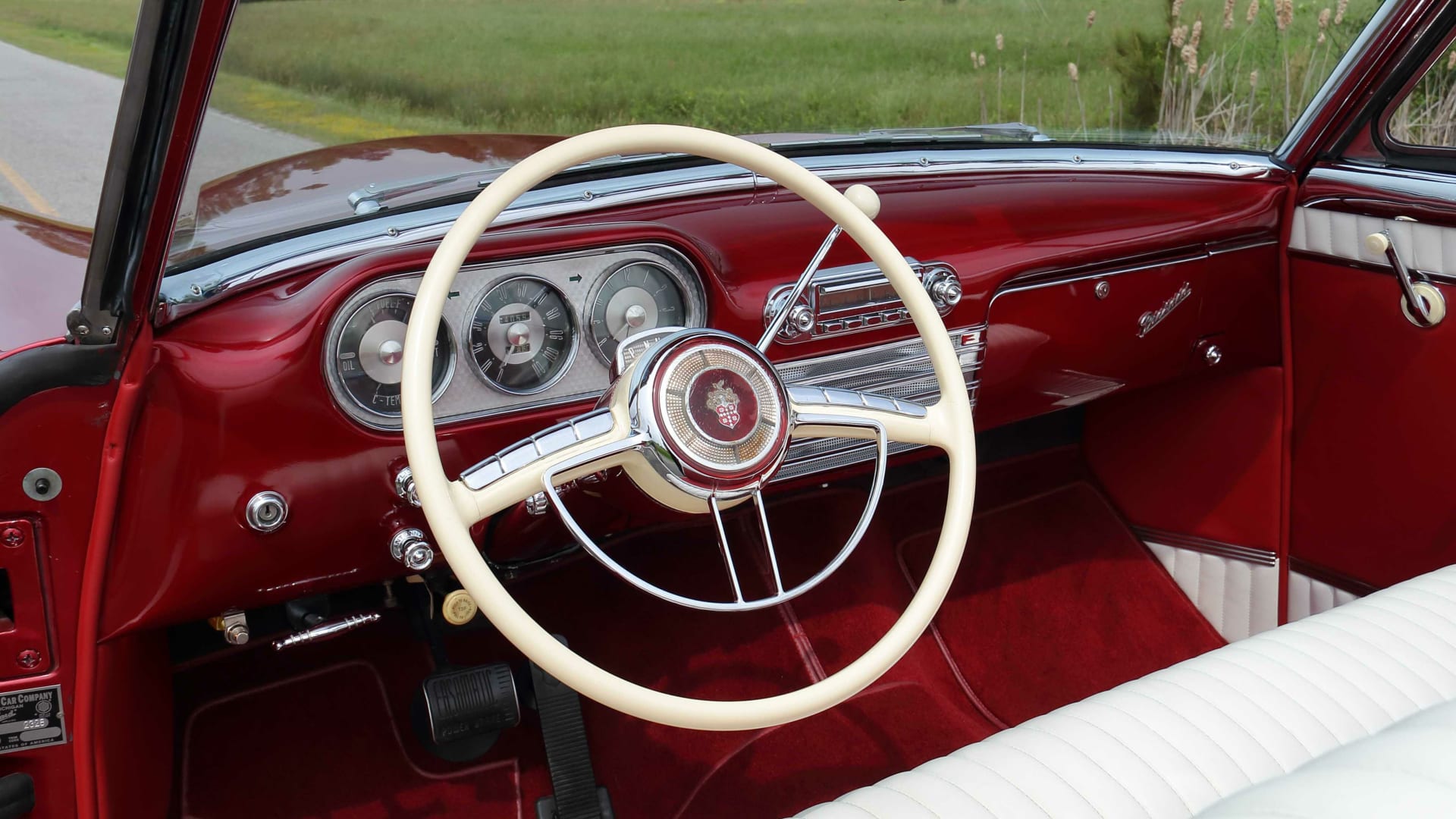
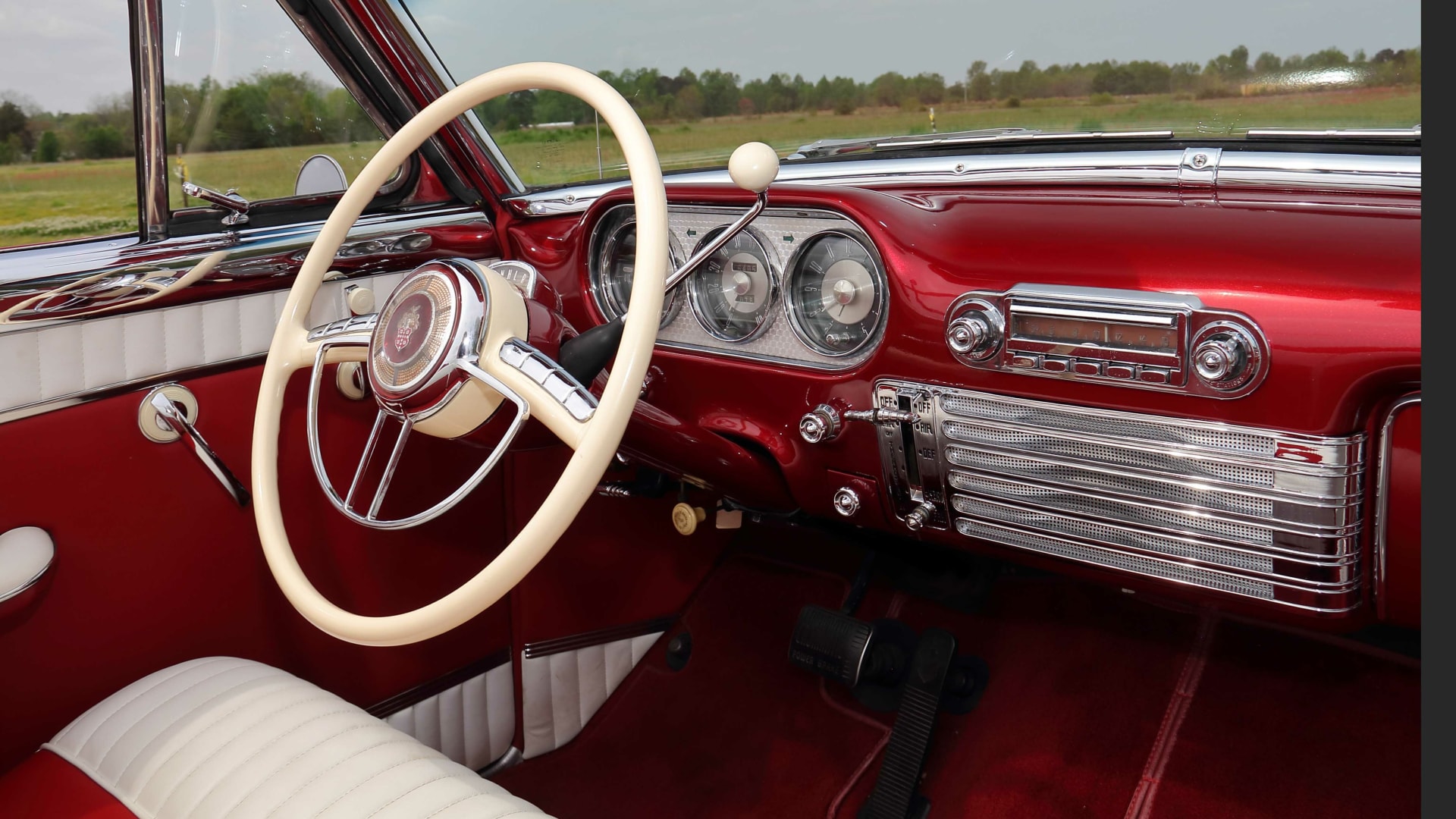
1953 Packard Caribbean Convertible

 In 1953 the U.S. auto industry was in full swing and at the beginning of two boom decades.  It manifested its vibrancy and vigor by bringing dream cars to market, including the Eldorado, Skylark, Fiesta and Corvette of GM’s Motorama and Packard’s Caribbean Custom Convertible.

1953 Packard Caribbean Convertible

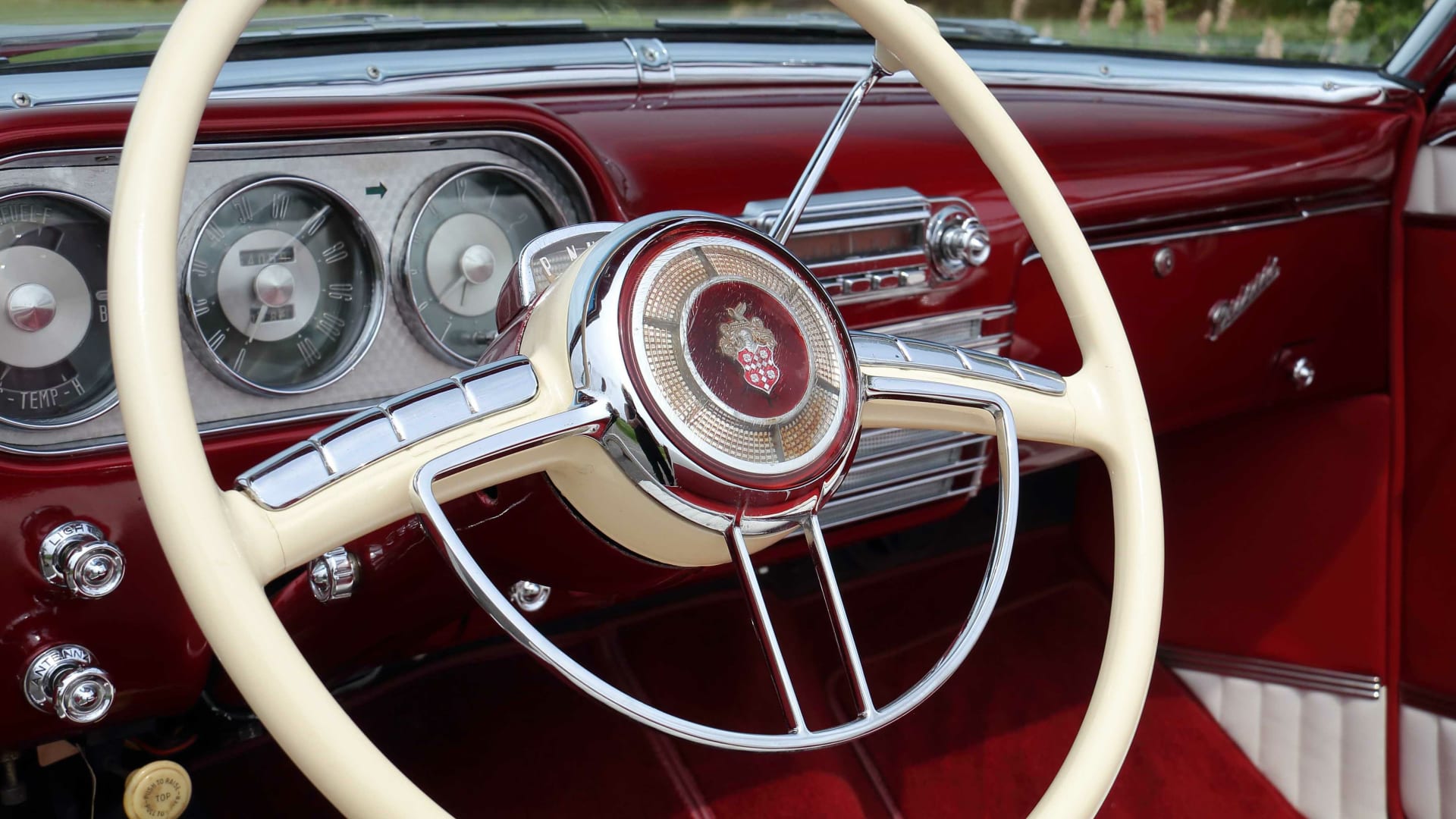
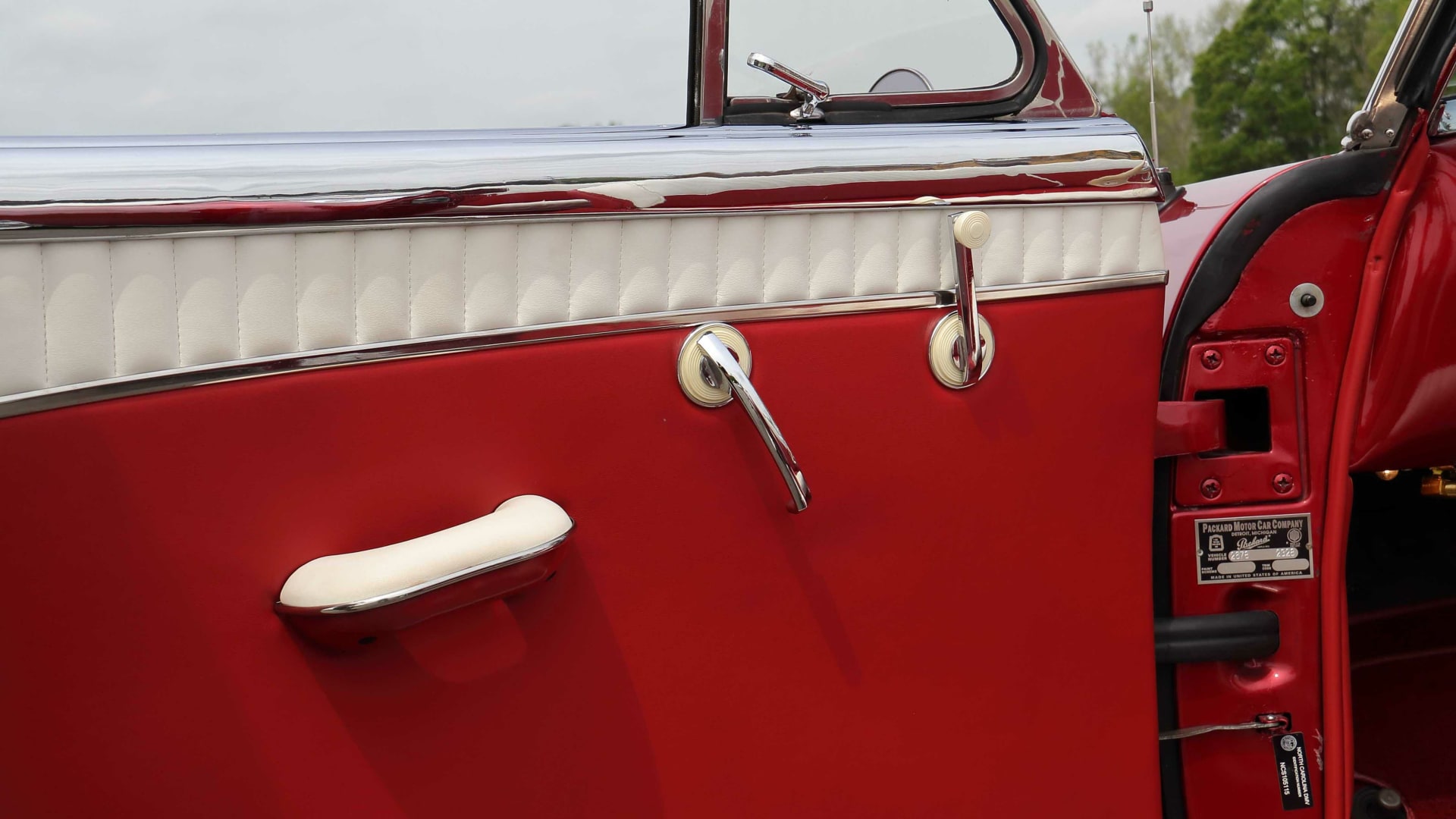
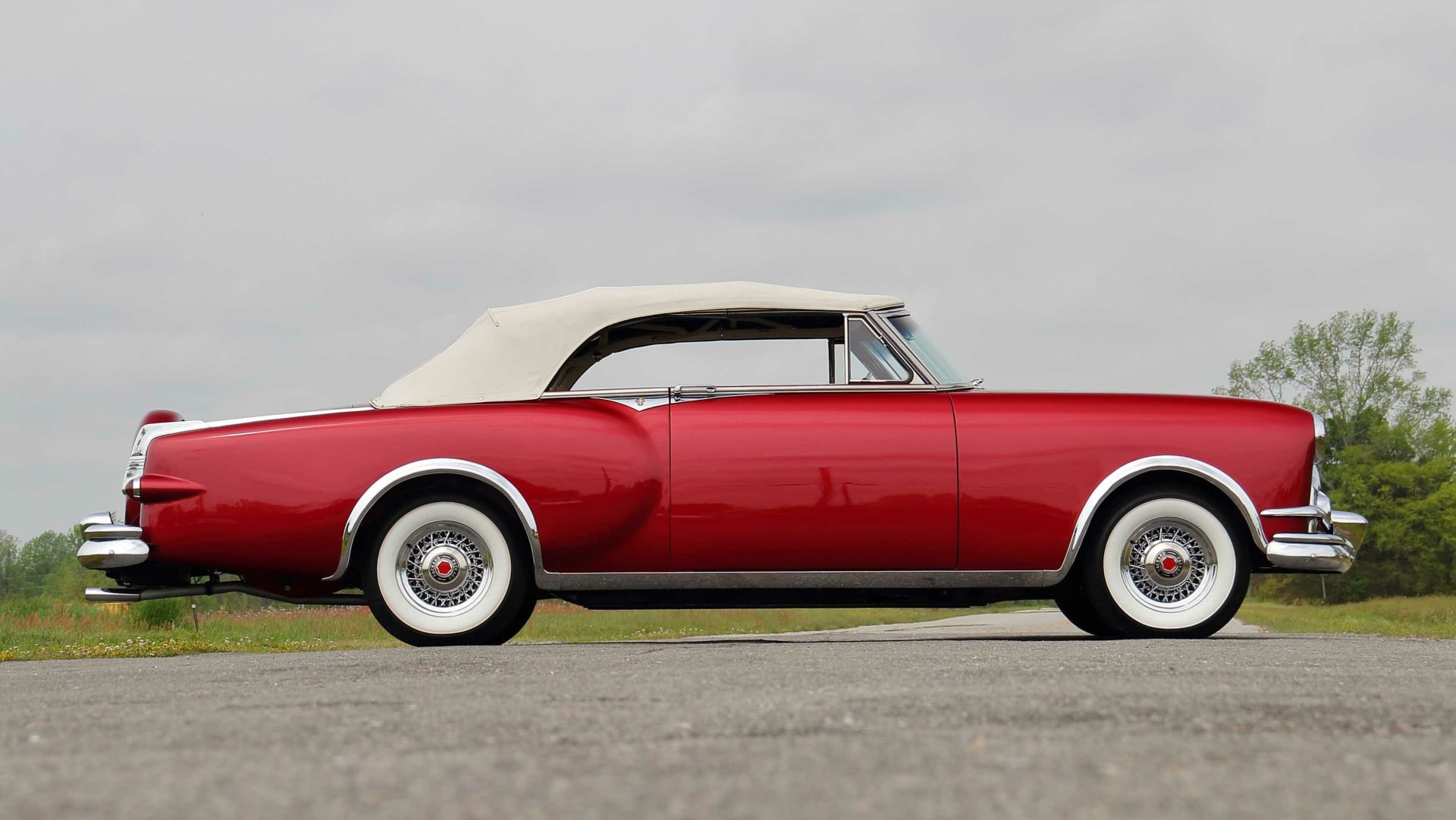
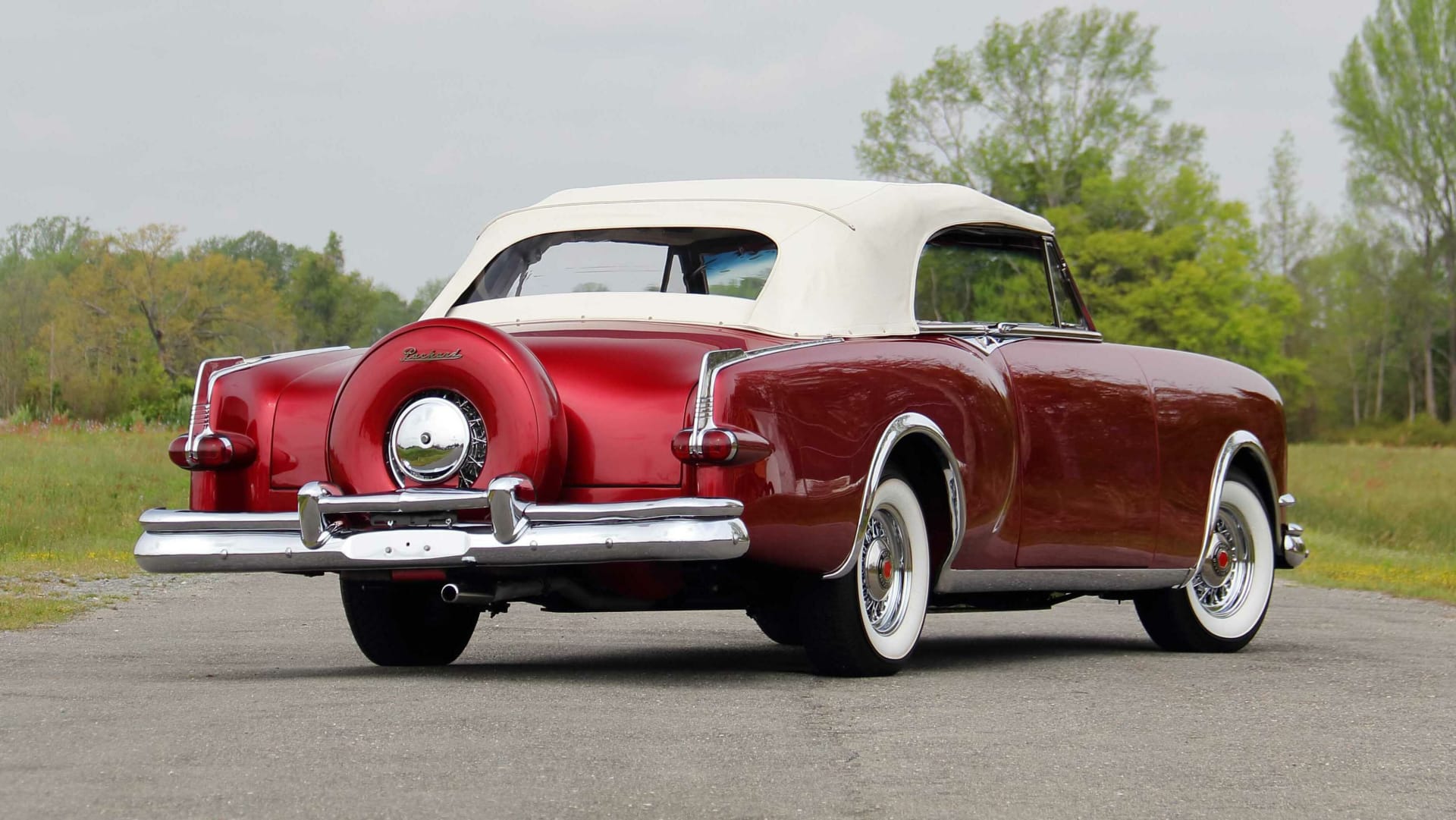
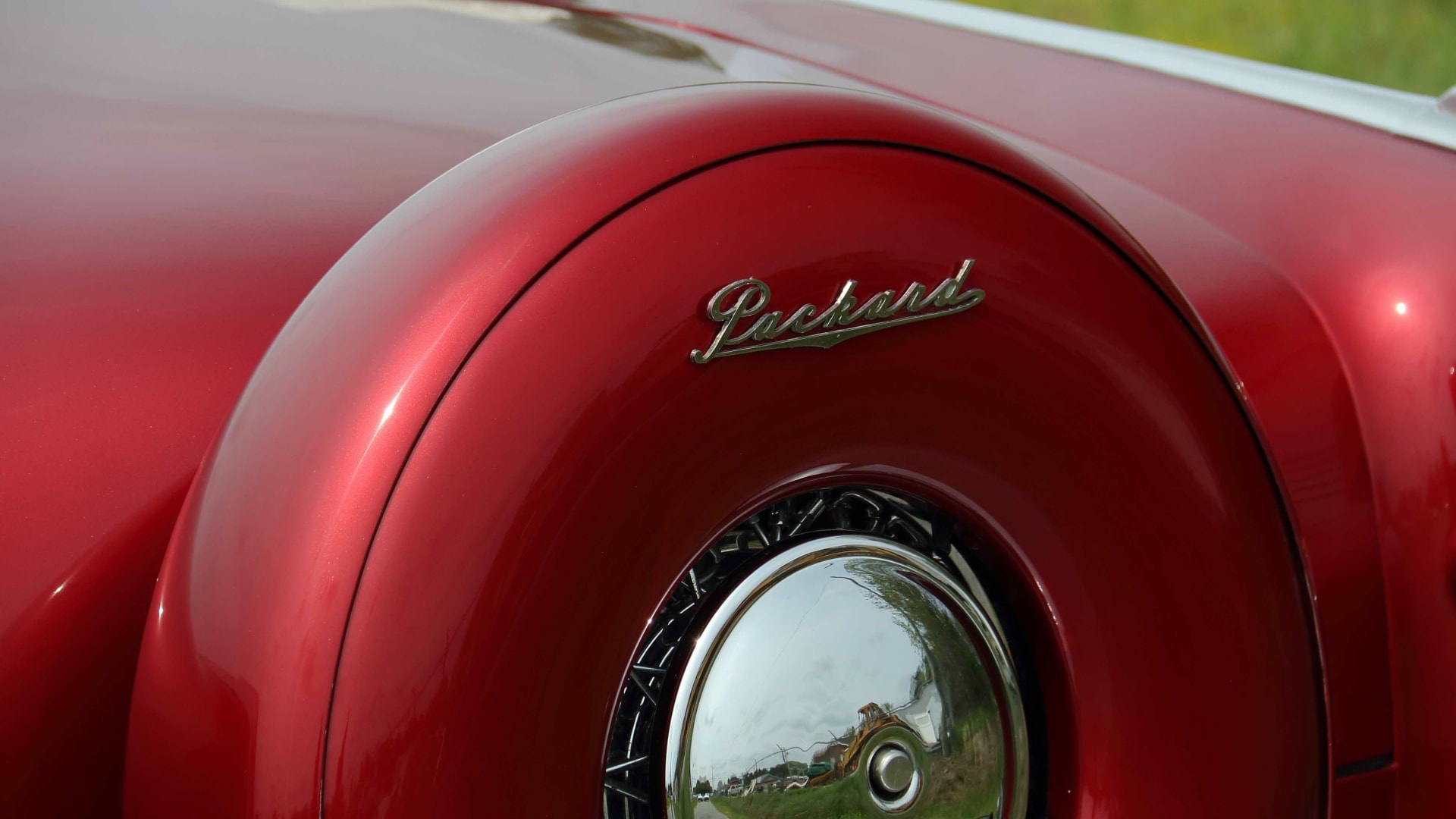
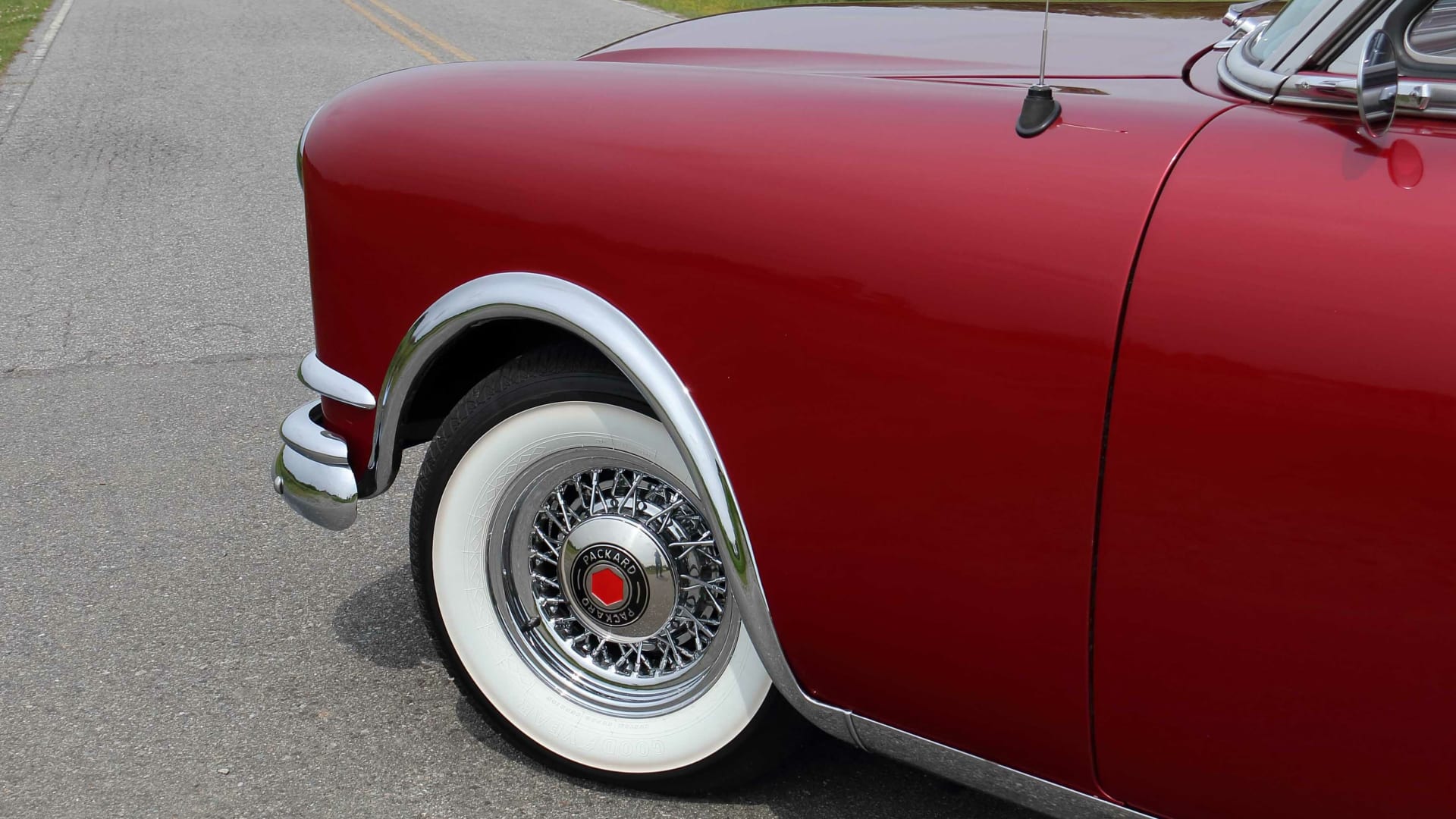
There were just 750 of these distinctive Caribbean convertibles built on the Cavalier convertible chassis by Mitchell-Bentley Corp. in Ionia, Michigan. The design featured an enclosed rear-mounted spare tire, radiused wheel arches, a full-width hood scoop, chrome wire wheels, unique rear fenders, horizontal tail lights and full leather interior upholstery.
1953 Packard Caribbean Convertible

This is a fabulous restoration that has been well maintained and recently treated to a thorough detailing. It is painted black and has attractive black and white leather upholstery and a black cloth top.
1953 Packard Caribbean Convertible

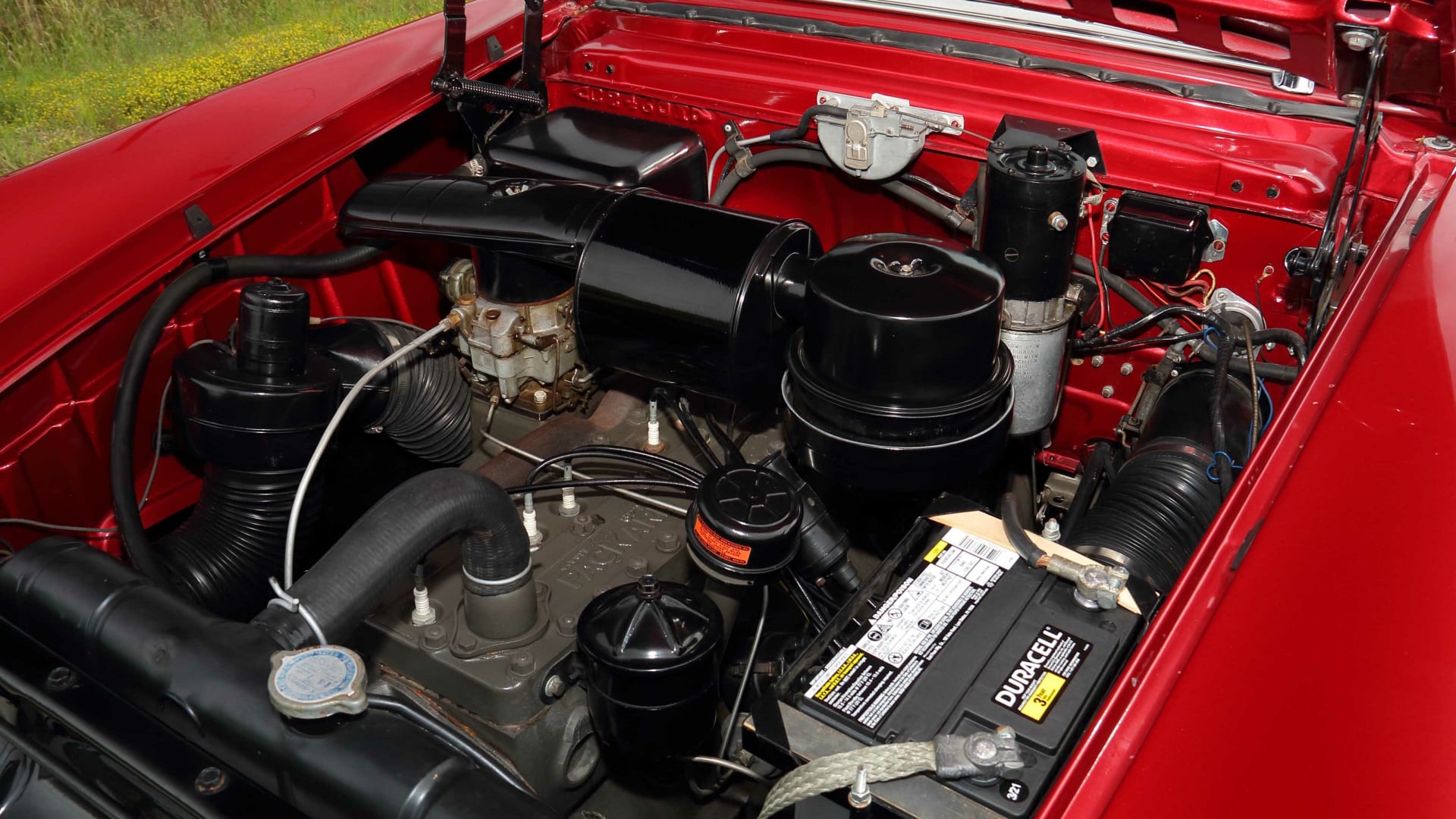
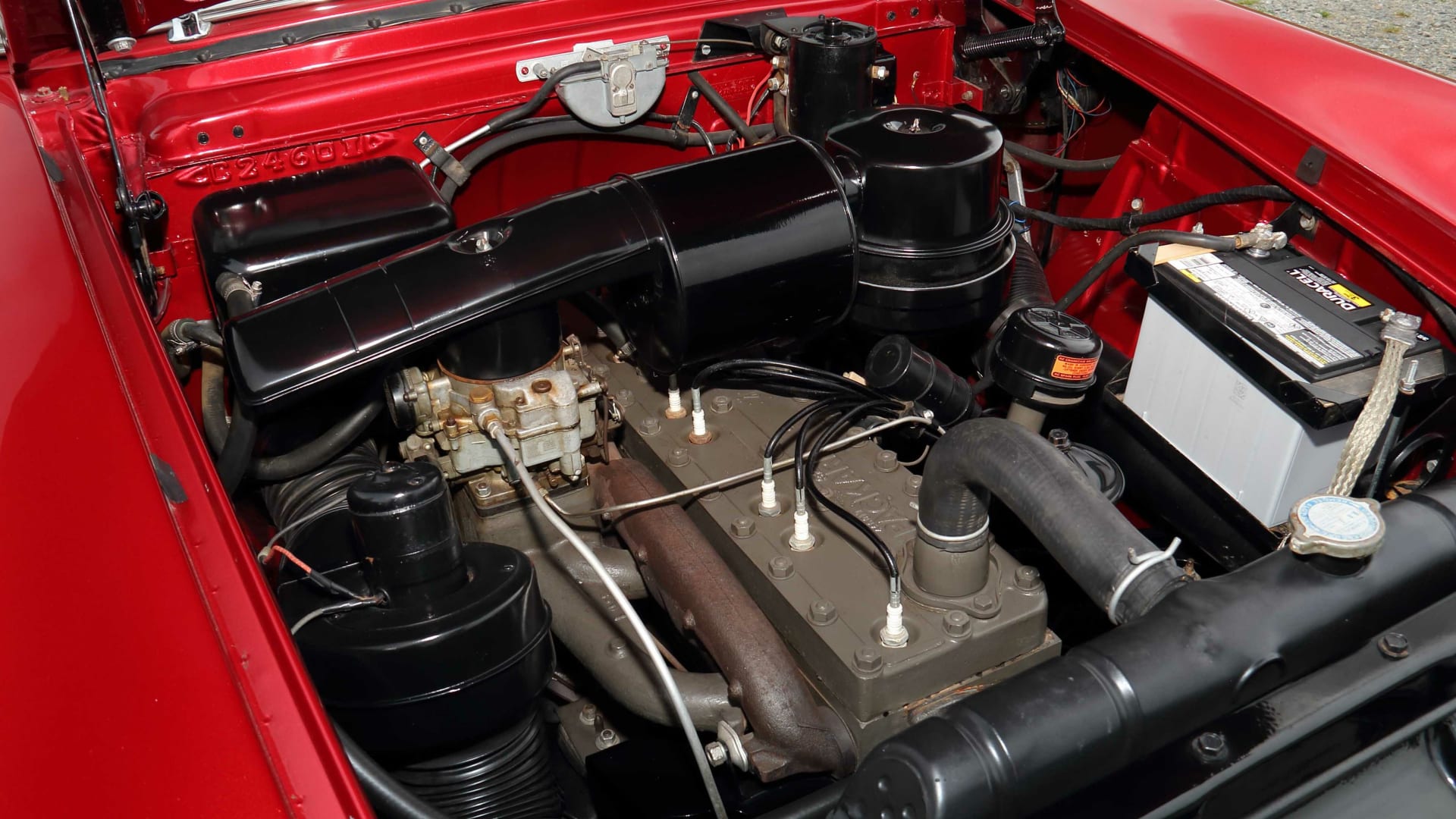
The 327cid Packard inline 8 breathed through a 4-barrel carburetor which boosted the power to 180hp at 4,000rpm. It drives through Packard’s Ultramatic automatic transmission.
1953 Packard Caribbean Convertible

In addition to the standard Caribbean features it has power steering, a set of Packard Unity fog lights, dual remotely operated spotlights, wide white wall tires, Wonder Bar radio, heater, seat belts and power windows. Caribbeans are rare and very special automobiles. This is an example to take note of.
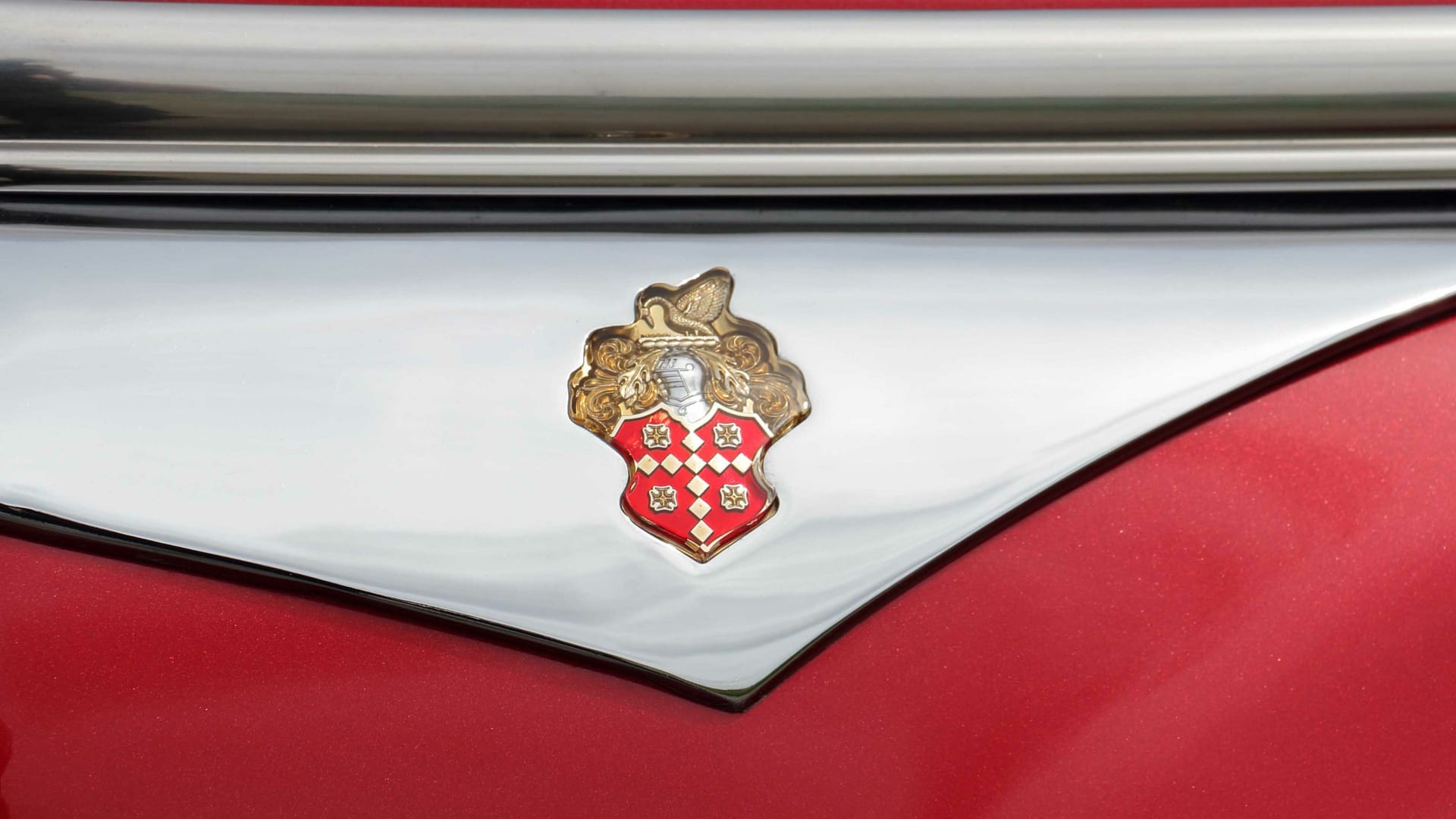
1953 Packard Caribbean Convertible

1953 Packard Caribbean Convertible

1953 Packard Caribbean Convertible

1953 Packard Caribbean Convertible

1953 Packard Caribbean Convertible

1953 Packard Caribbean Convertible

1953 Packard Caribbean Convertible

1953 Packard Caribbean Convertible

1953 Packard Caribbean Convertible

1953 Packard Caribbean Convertible

1953 Packard Caribbean Convertible

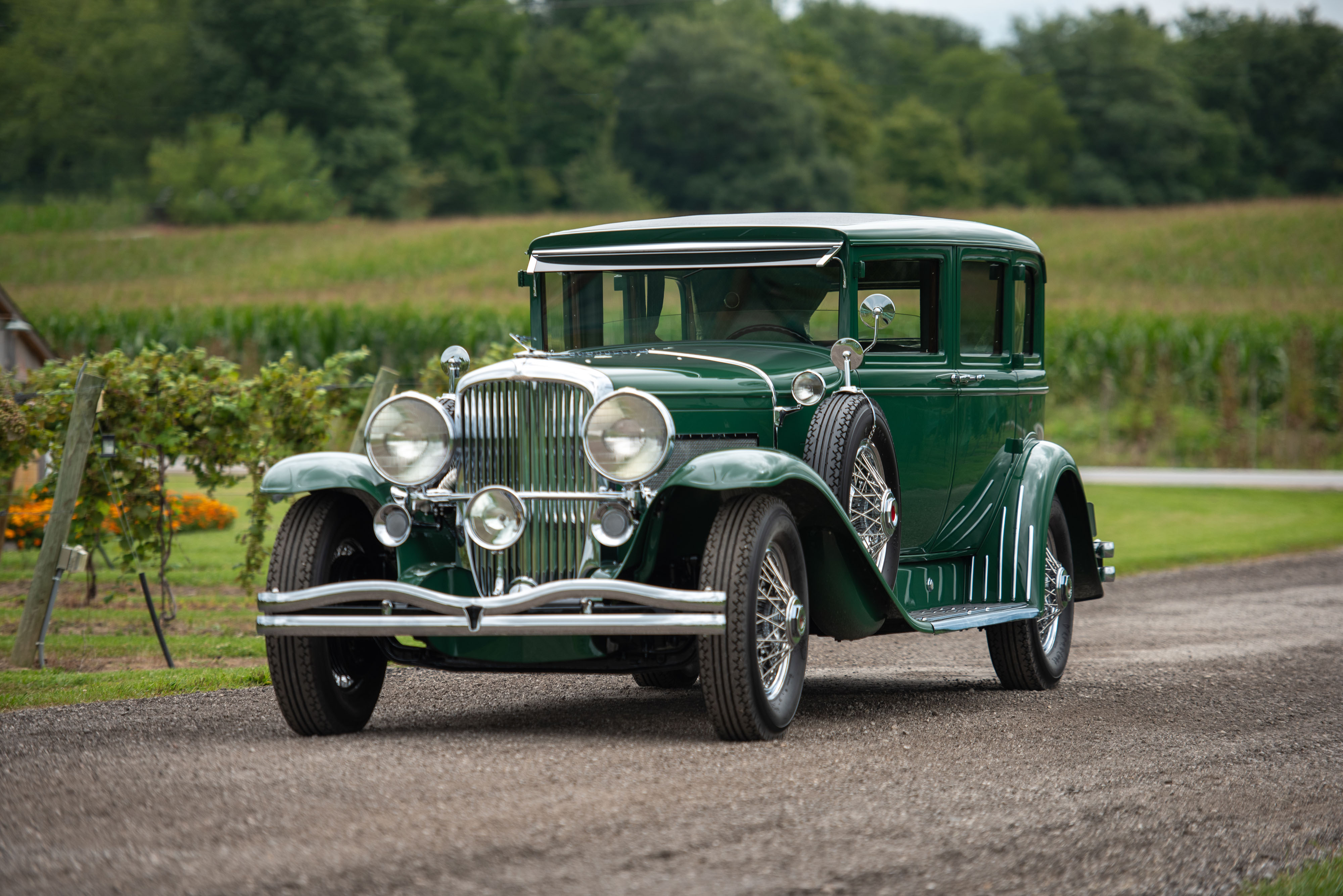
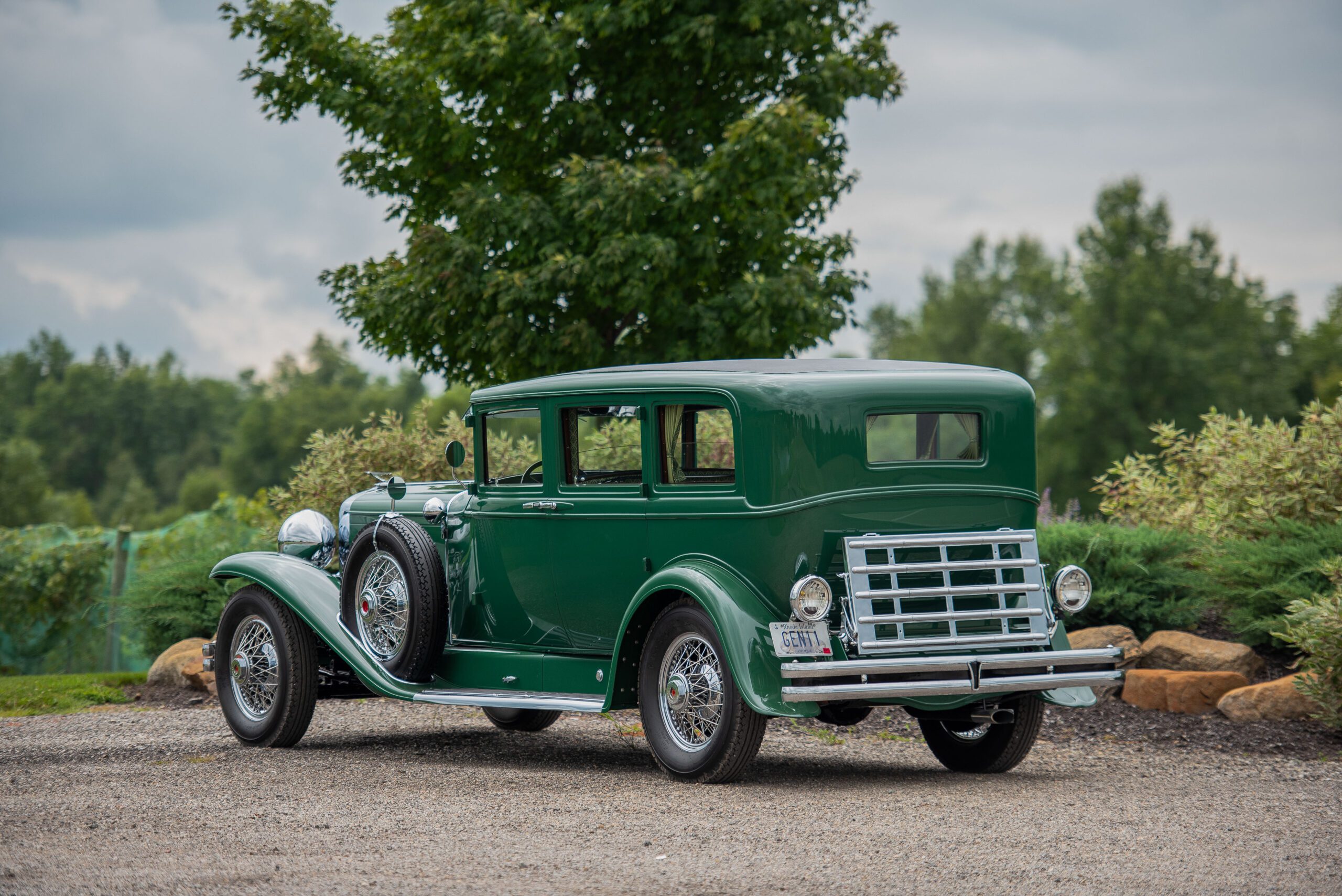
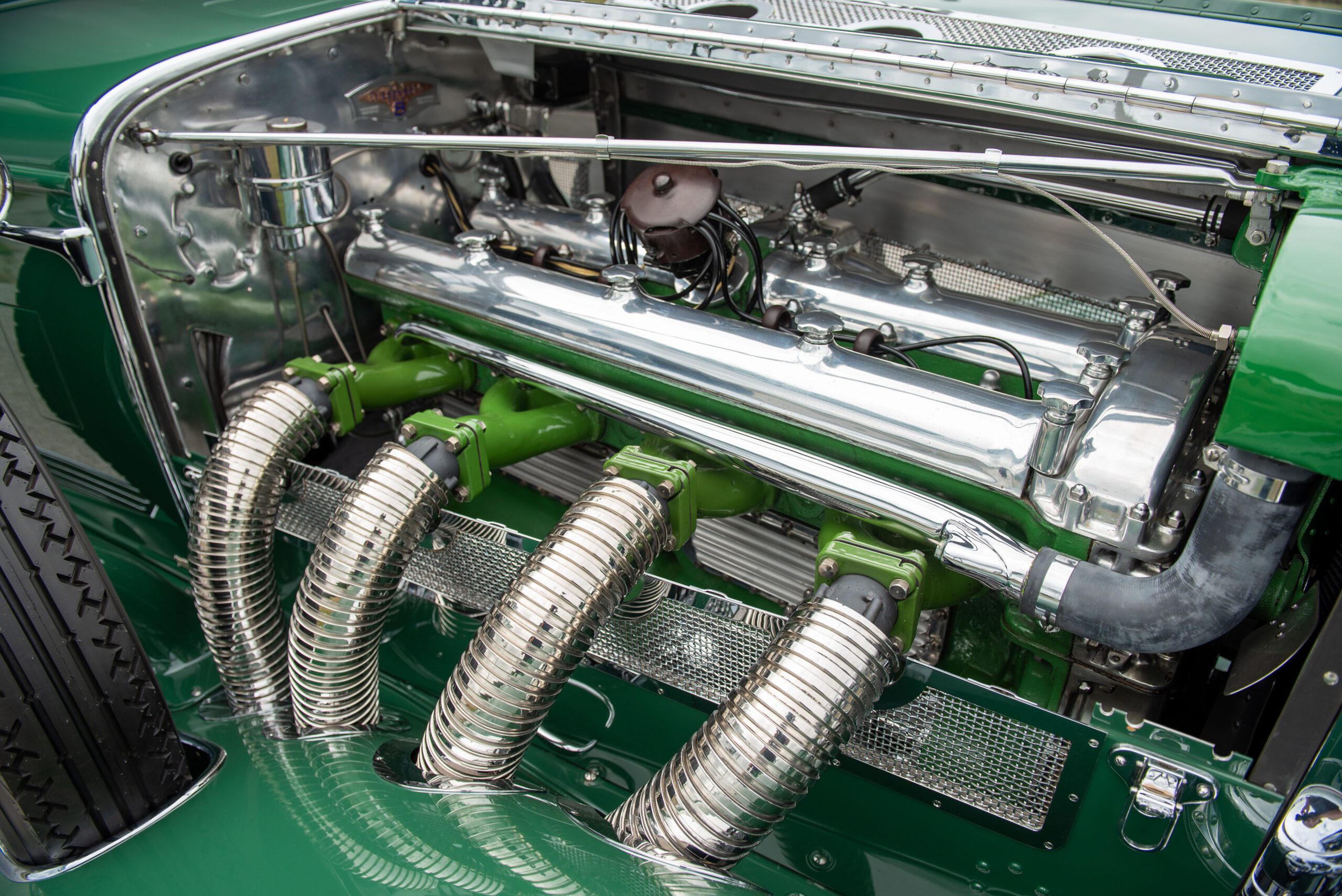
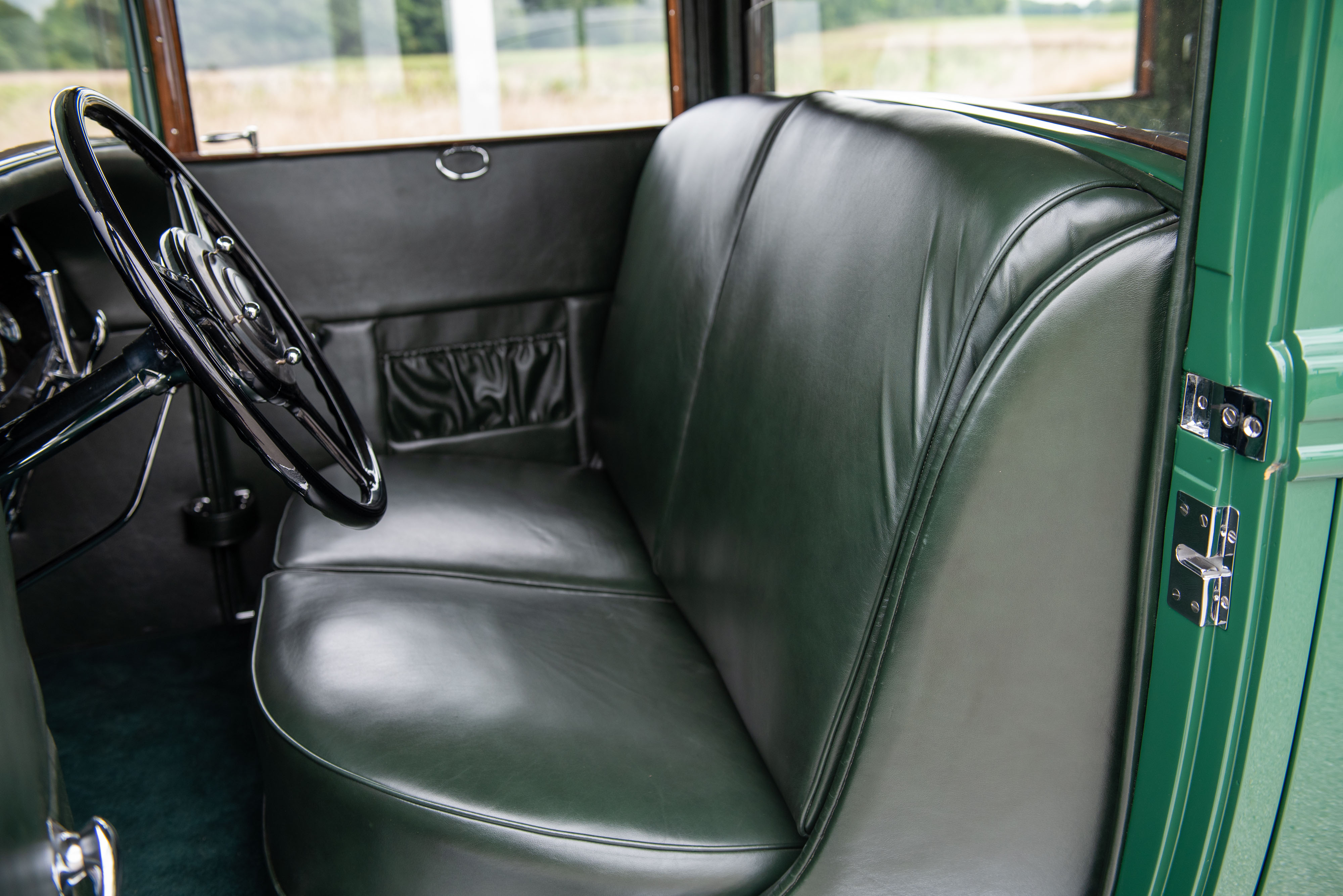
1930 Duesenberg Model J Esteemed by the most distinguished families on the East Coast


The Willoughby Company, based in Utica, New York, stood as a premier coachbuilder during the illustrious Classic Era. Esteemed by the most distinguished families on the East Coast, they were renowned for their sturdy craftsmanship and exquisite details found in their limousine and sedan bodies. While collaborating with numerous prestigious automobile manufacturers of the time, Willoughby gained particular acclaim for their exceptional work on the Duesenberg, especially during the initial years of Model J production.

They crafted approximately 50 bodies for the Model J, all of which were closed designs, including around 20 classic seven-passenger limousines built on the elongated 153 1/2-inch-wheelbase chassis. Regrettably, these limousines have not endured with a high survival rate, making them exceedingly rare among the various Model J variations. Today, only four of these remarkable examples remain in existence.

Also among the 54 cars offered for sale from the Quinn Collection was a 1955 Mercedes-Benz 300SL Gullwing Coupe ($687,500), a 1935 Auburn 851SC Speedster ($418,000) and a unique 1964 Pontiac Bonneville Custom Convertible built for Hank Williams Jr.

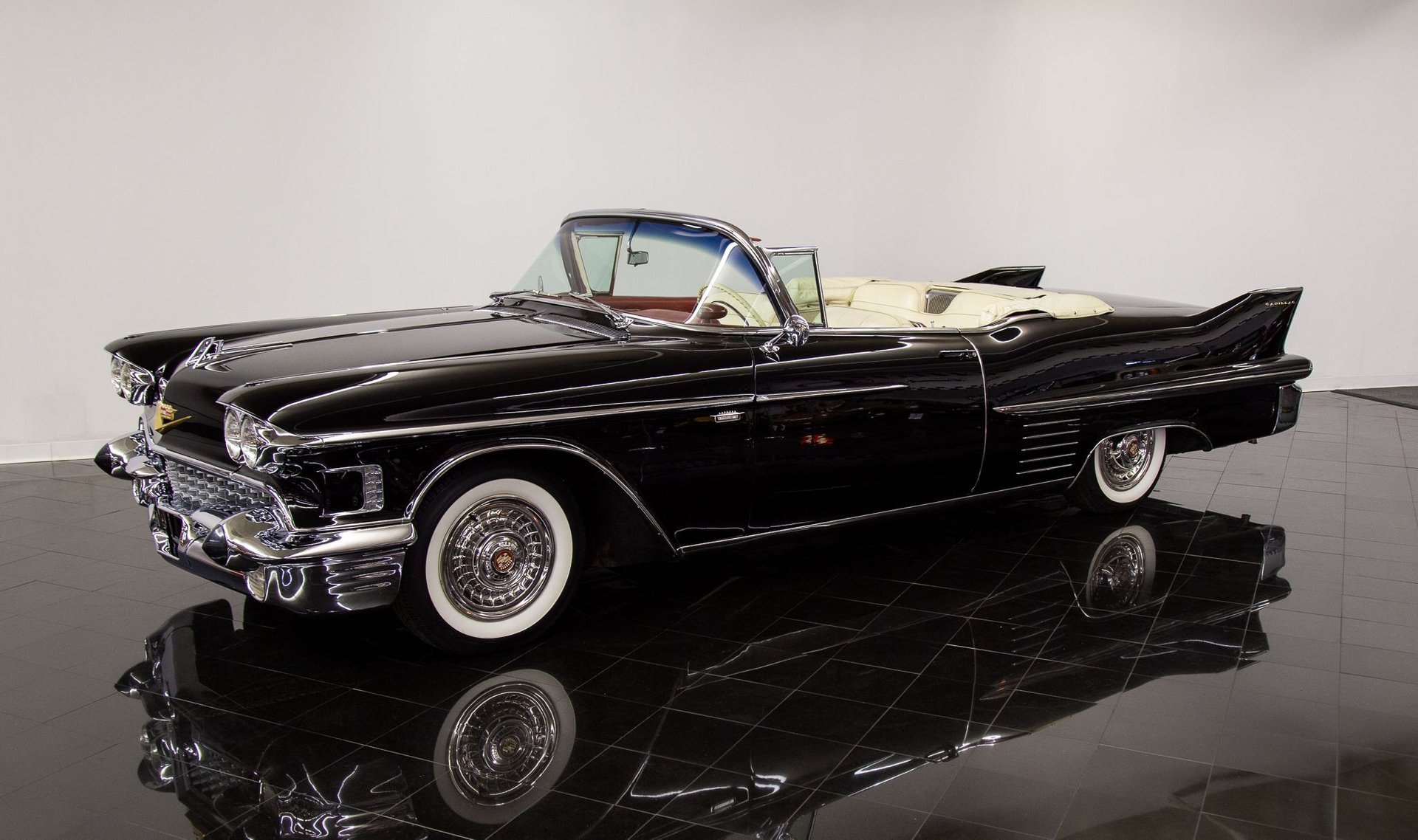
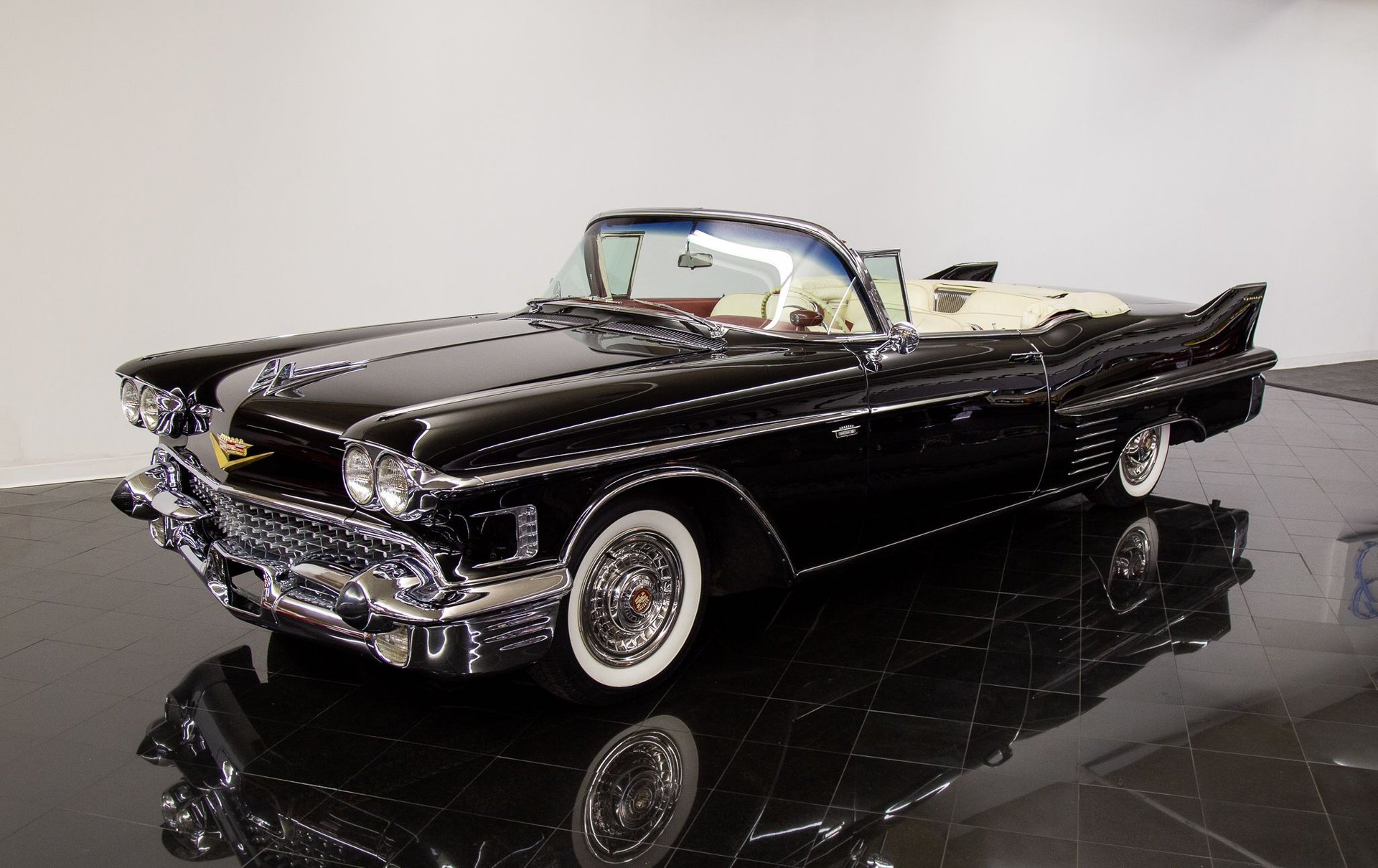
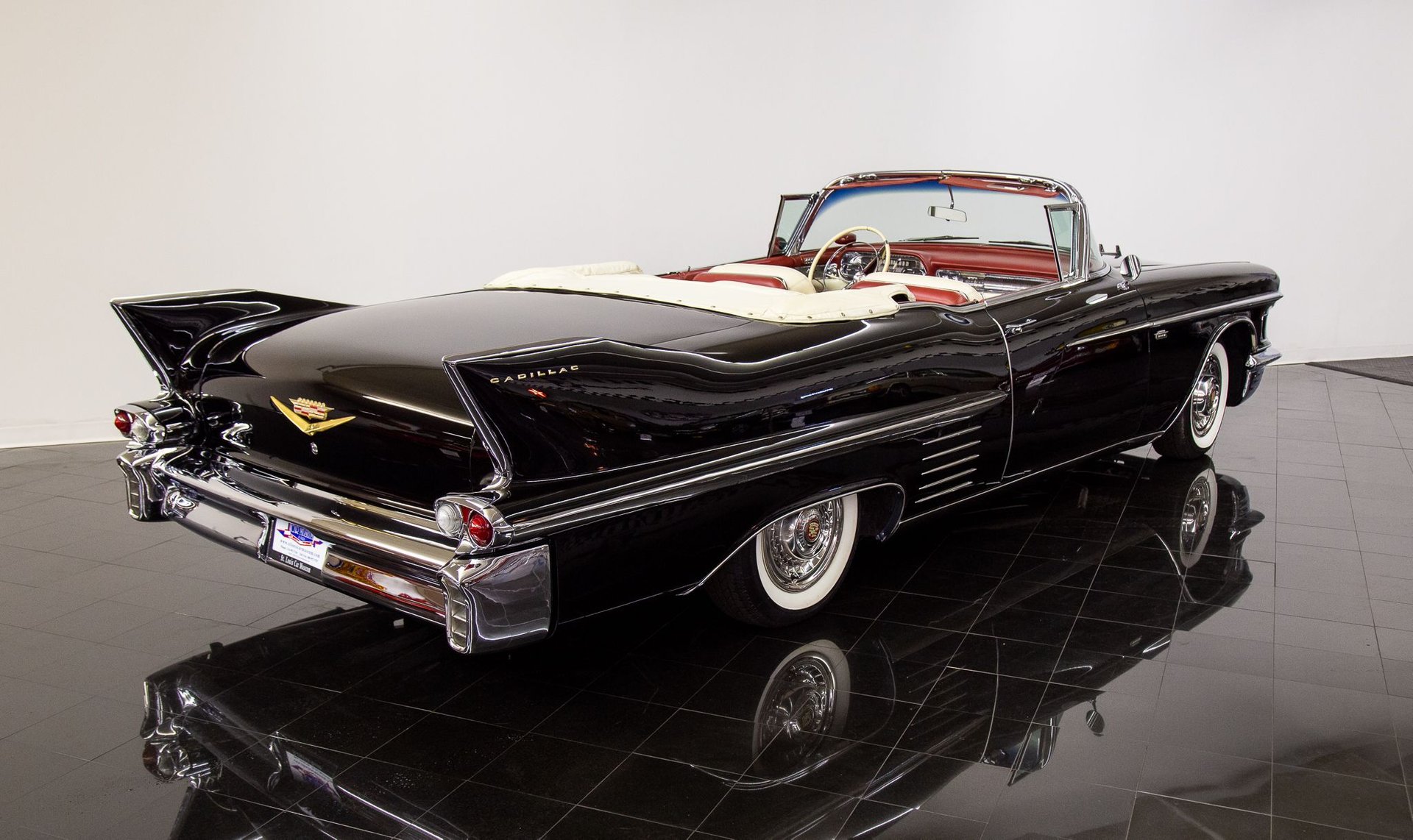
1958 Cadillac Convertible Series 62 was an anchor in the Cadillac line.

 1958 Cadillac Series 62

The Cadillac Series 62 bowed for the 1940 model year, known then as the 40-62. It was featured a sleek, aerodynamic design, with a raked windshield and curvier lines than previous Cadillac models. The Series 62 shared its platform with the Oldsmobile Series 90, the Pontiac Custom Torpedo, and the Buick Roadmaster. The C-body platform eliminated traditional running boards, allowing for increased width. The interior benefitted with ample hip and shoulder room. Opting for the HydraMatic automatic transmission moved the shifter to the steering column from the floor, allowing the Series 62 to comfortably seat six.

1958 Cadillac Series 62

1958 Cadillac Series 62

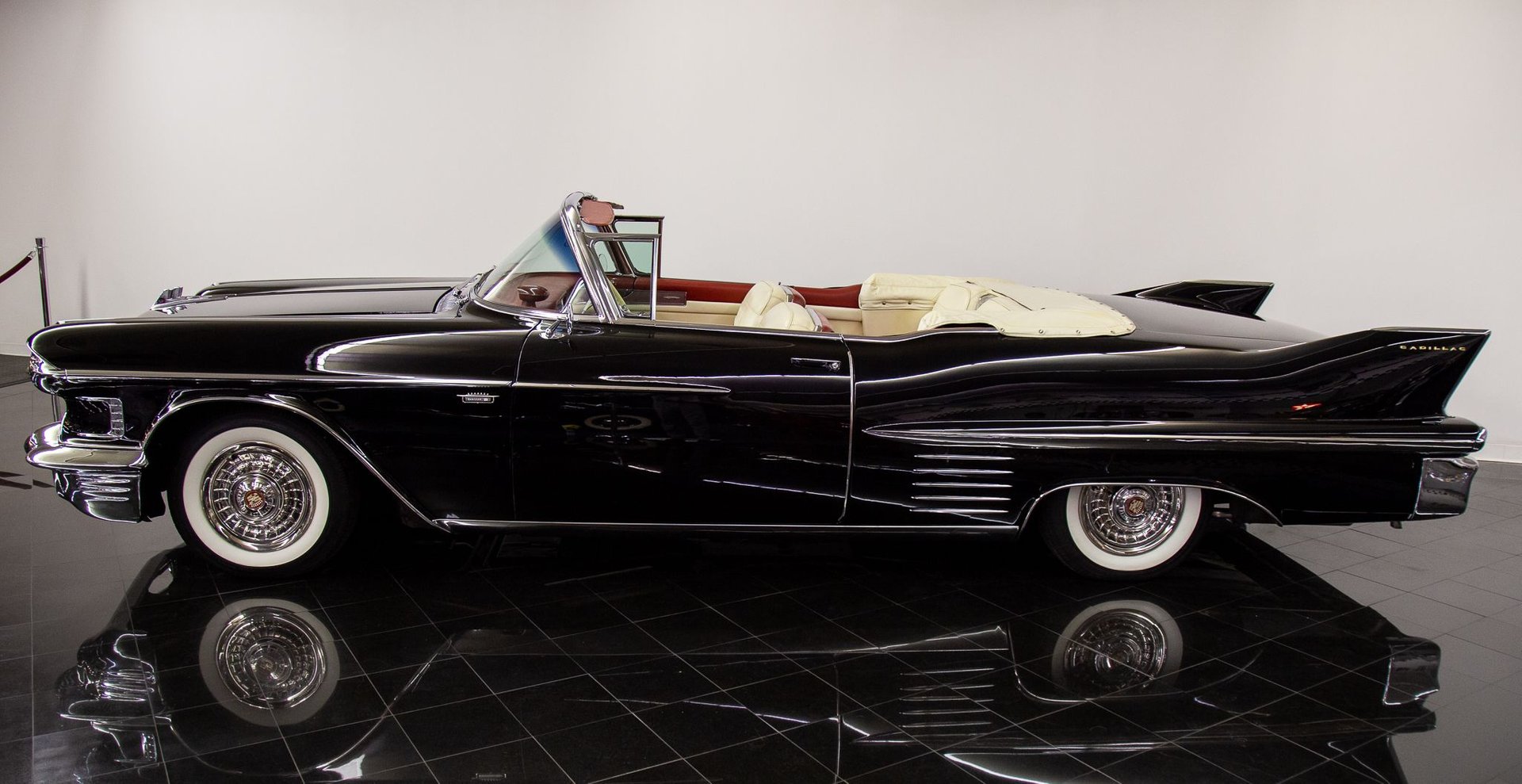
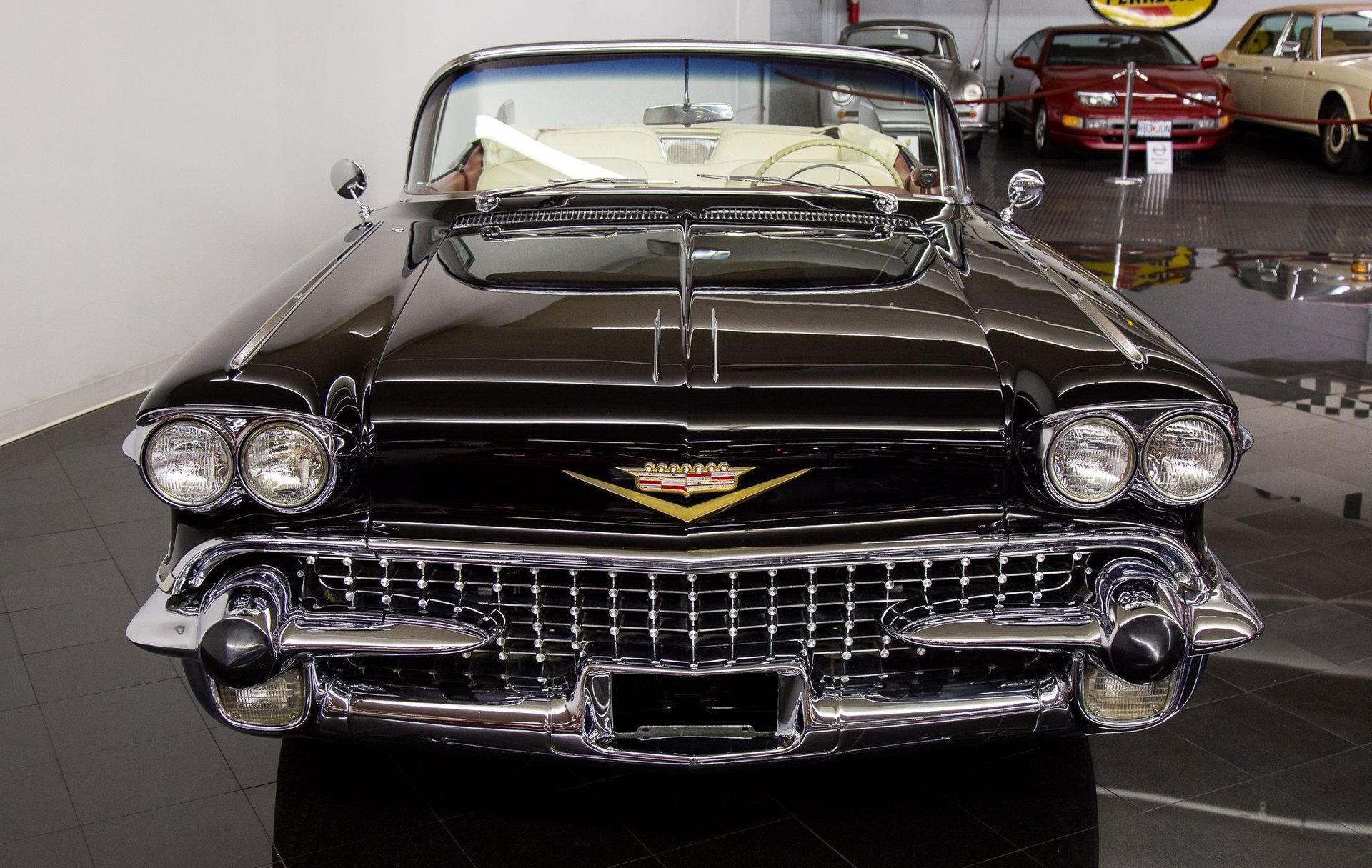
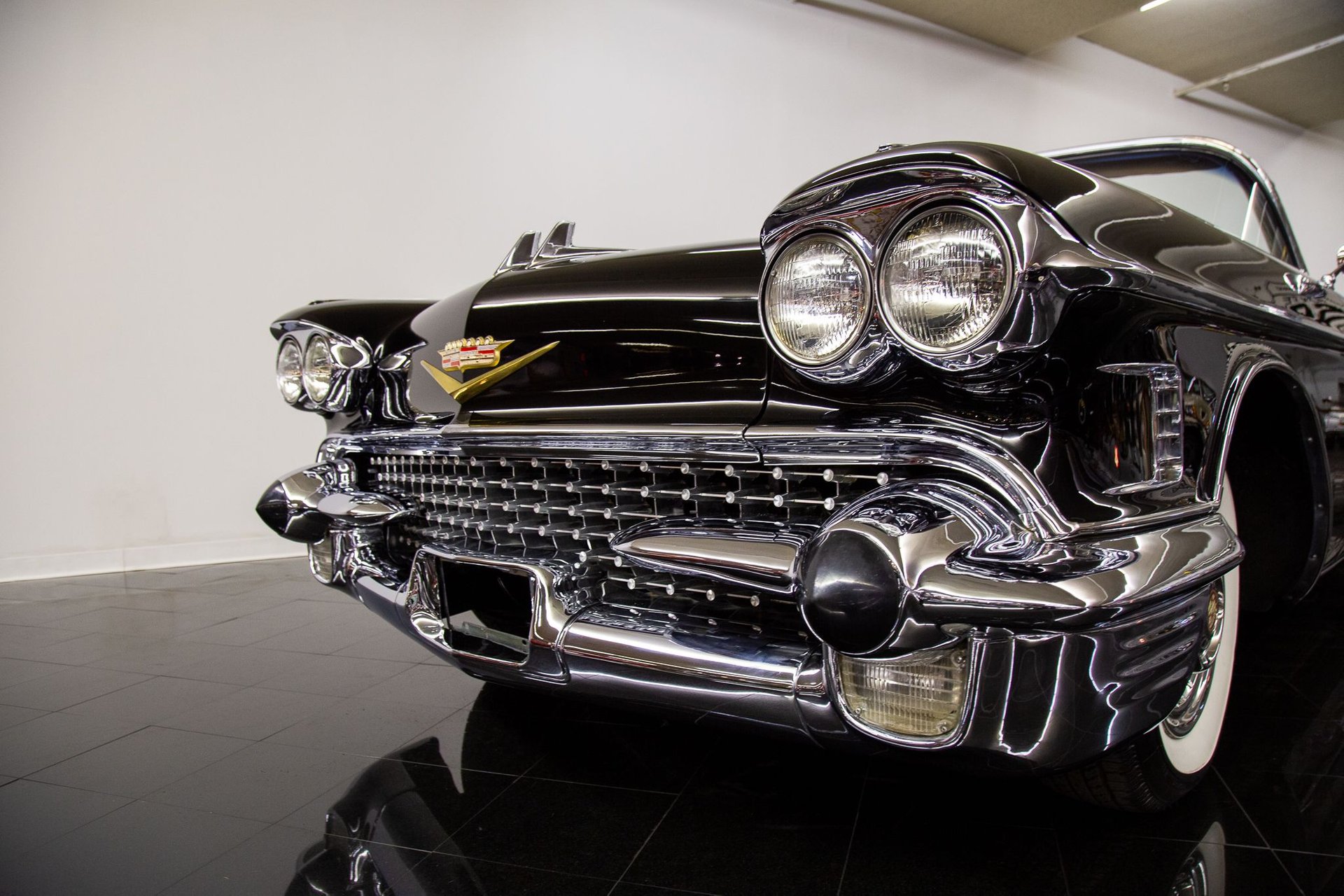
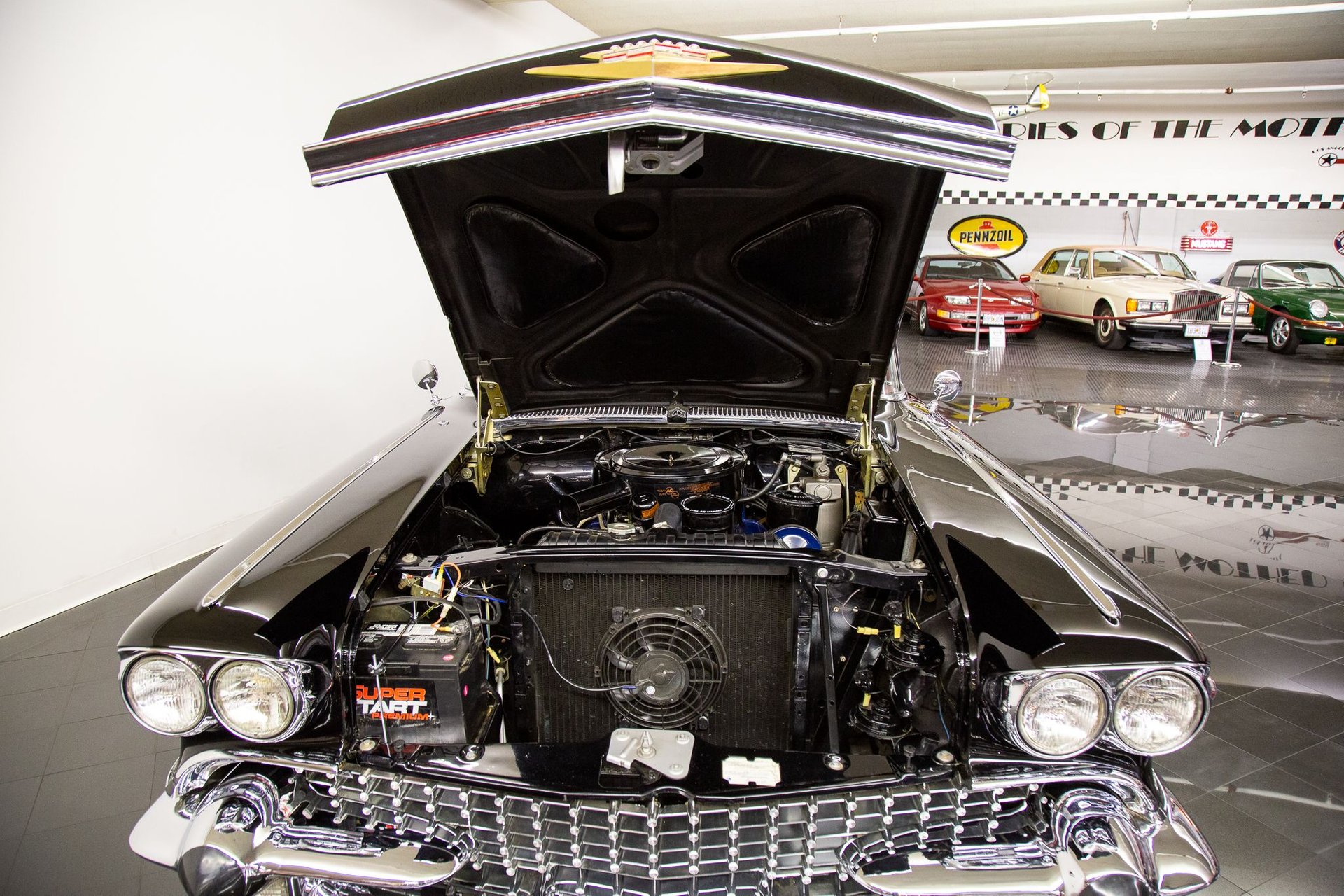
By 1958, the Cadillac Series 62 was an anchor in the Cadillac line. The last year of the fifth generation, the 1958 Series 62 received a facelift that featured two horizontally-arranged headlights per side, a wider grille, and bumper guards with driving lights just under the grille. More subtle tail fins had dual tail lights positioned just below, with dual bumper-exit exhaust. Just ahead of the rear wheels and beneath the belt line, five horizontal spears were added. This attractive body style would last just a single year.

1958 Cadillac Series 62

1958 Cadillac Series 62

The 1958 Cadillac Series 62 rode on the tubular X-frame adopted the previous year. GM touted the X-frame allowed for a lower body and increased torsional strength, without a loss of usable space. Air suspension was an available option. There were nine available body styles for 1958, including a new extended deck sedan. The DeVille and Eldorado would become their own models for the 1959 model year.

1958 Cadillac Series 62

1958 Cadillac Series 62

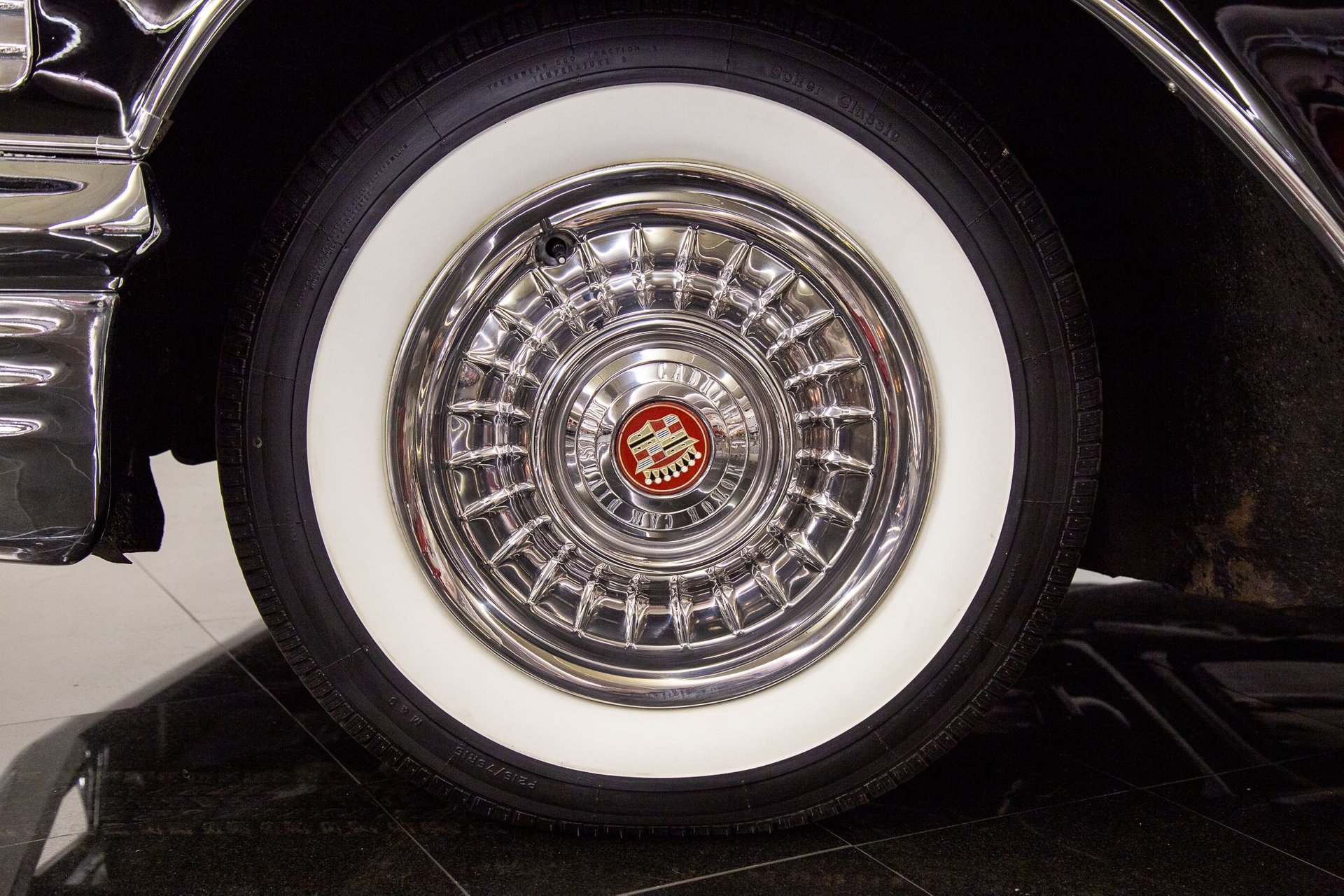
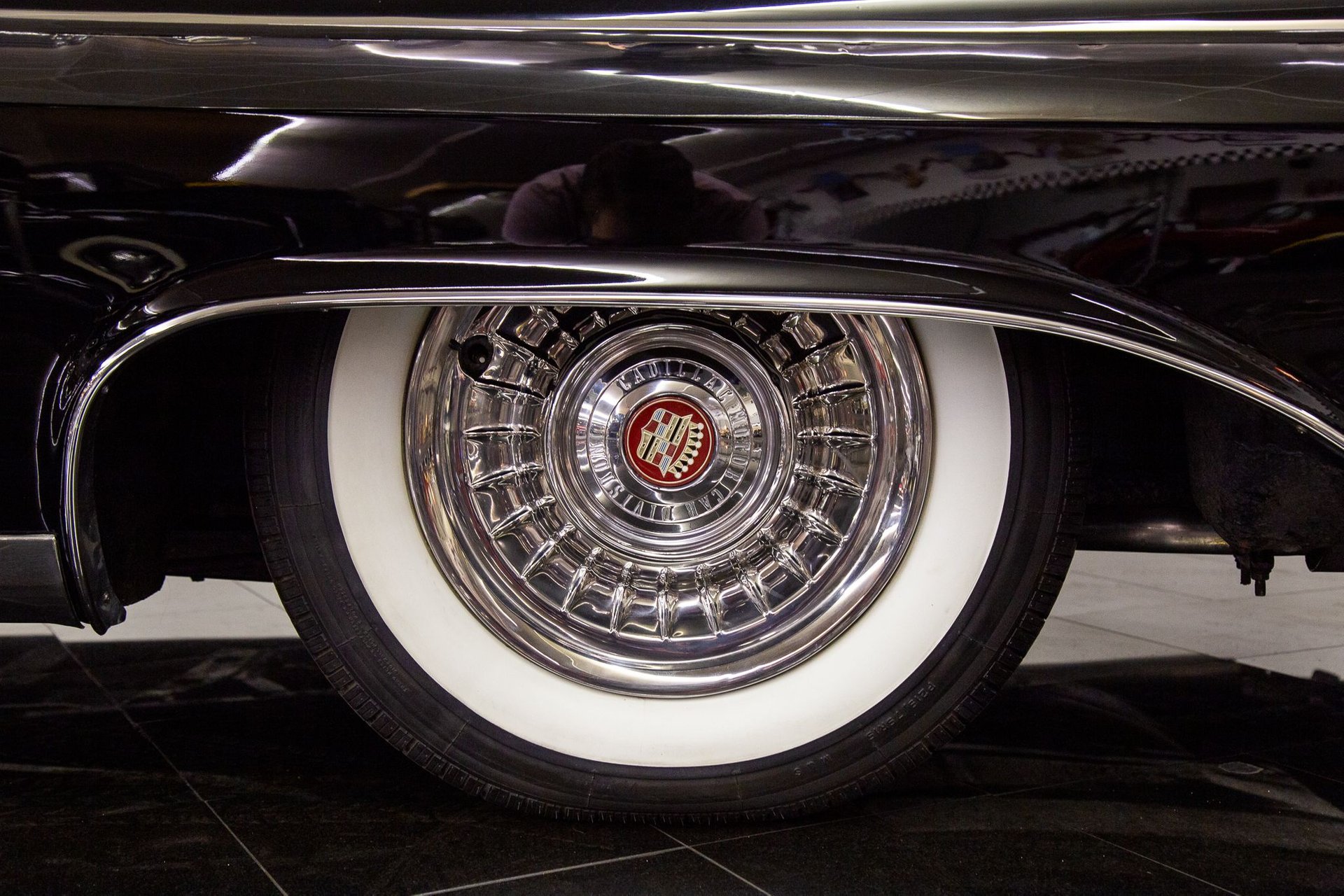
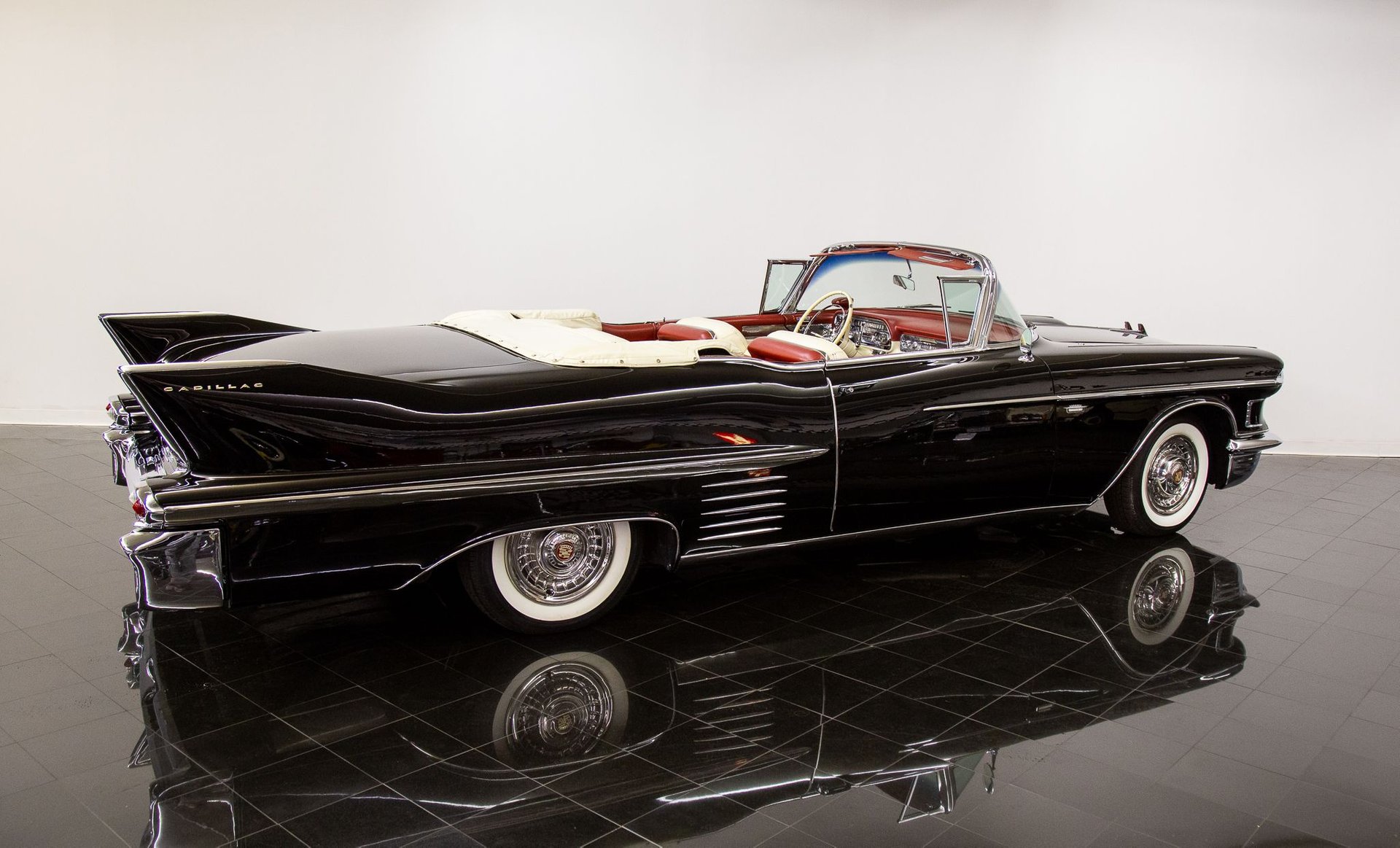
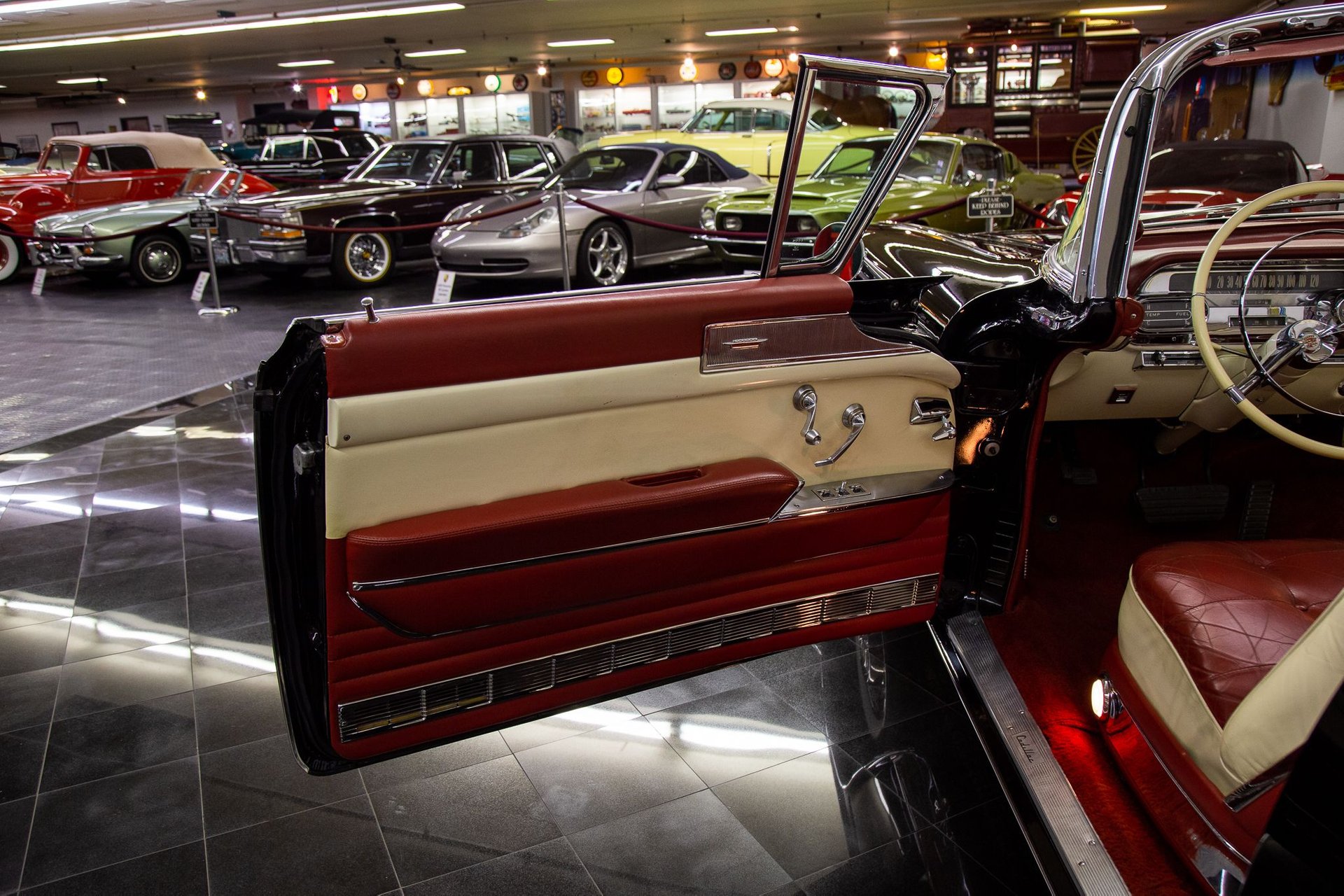
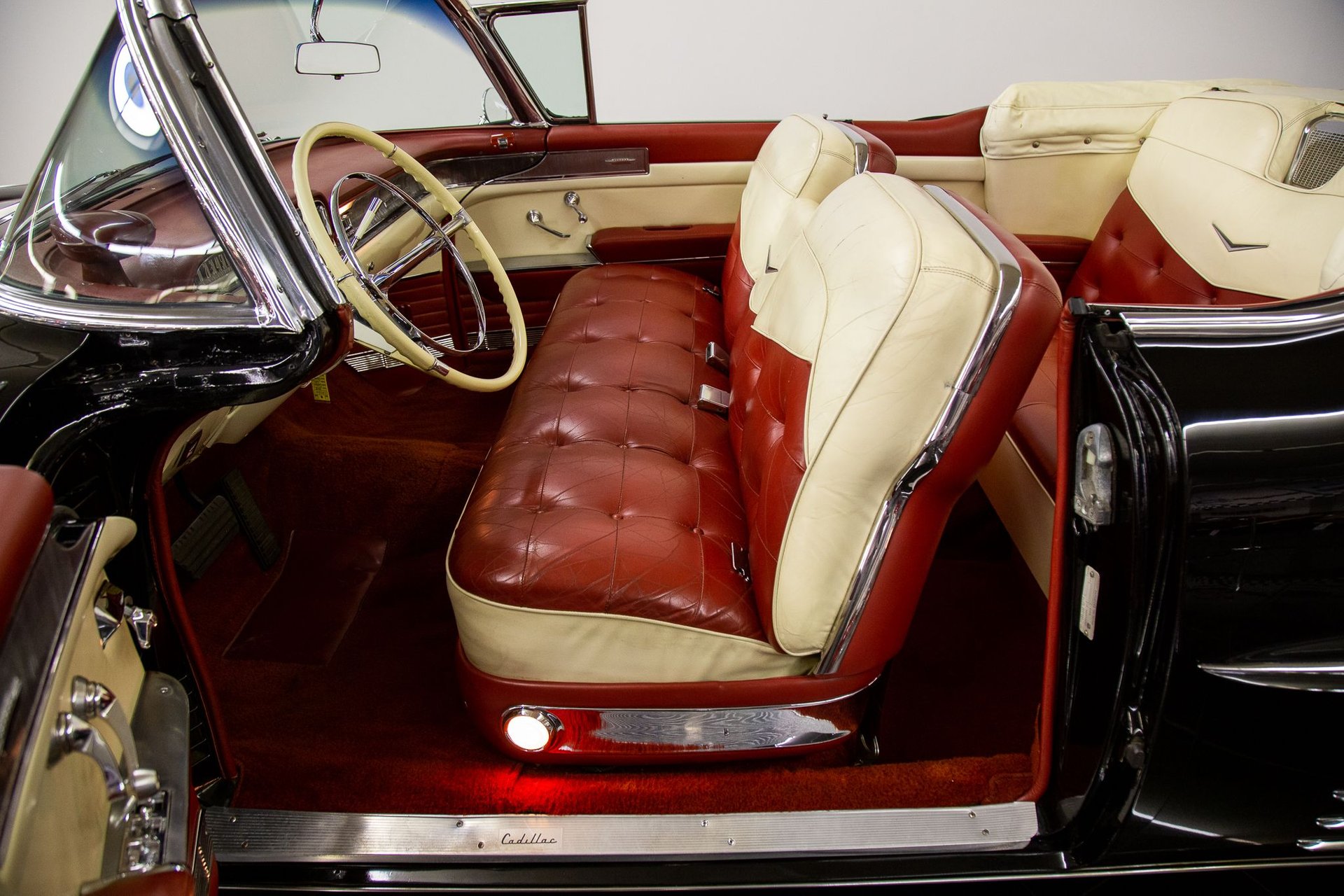
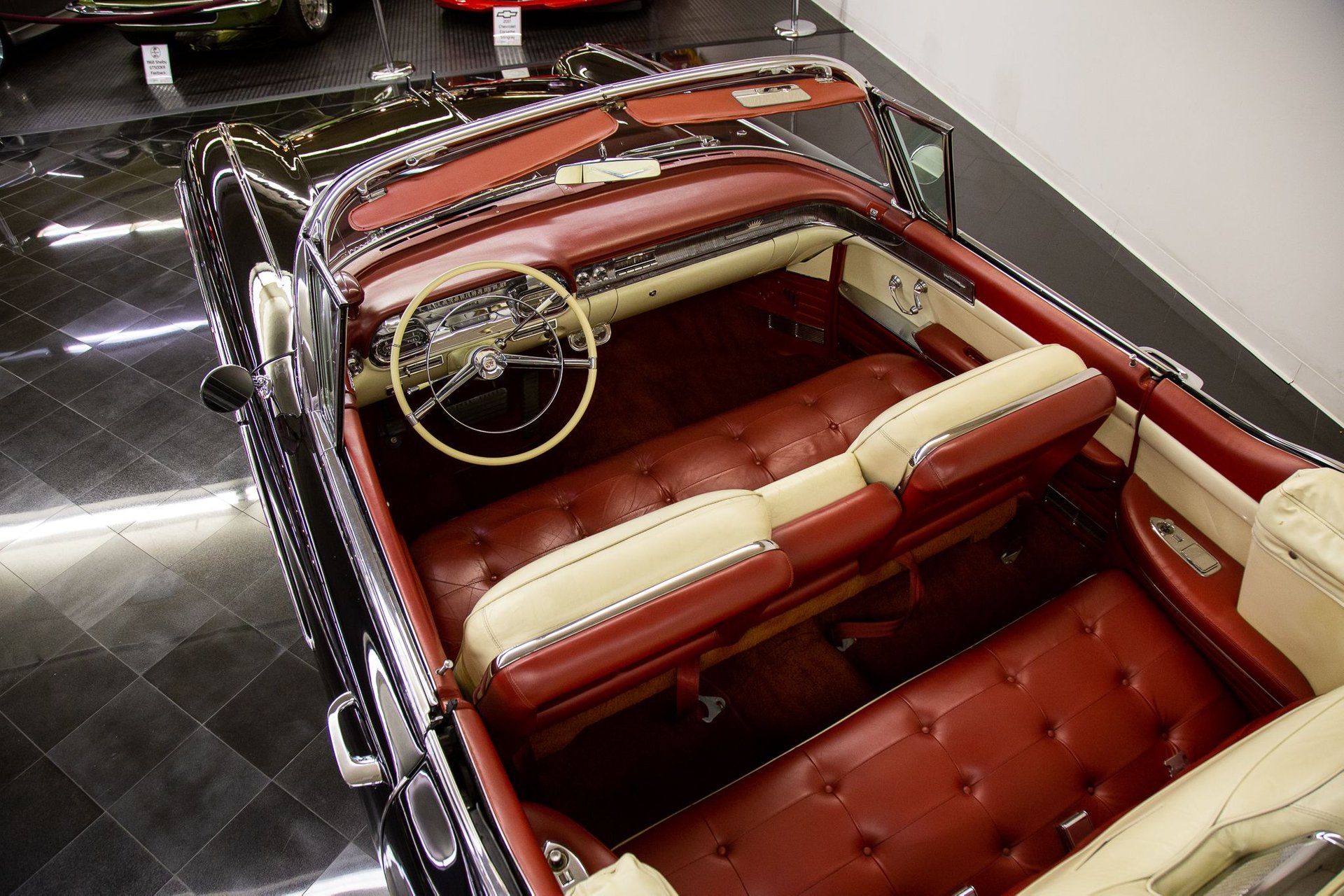
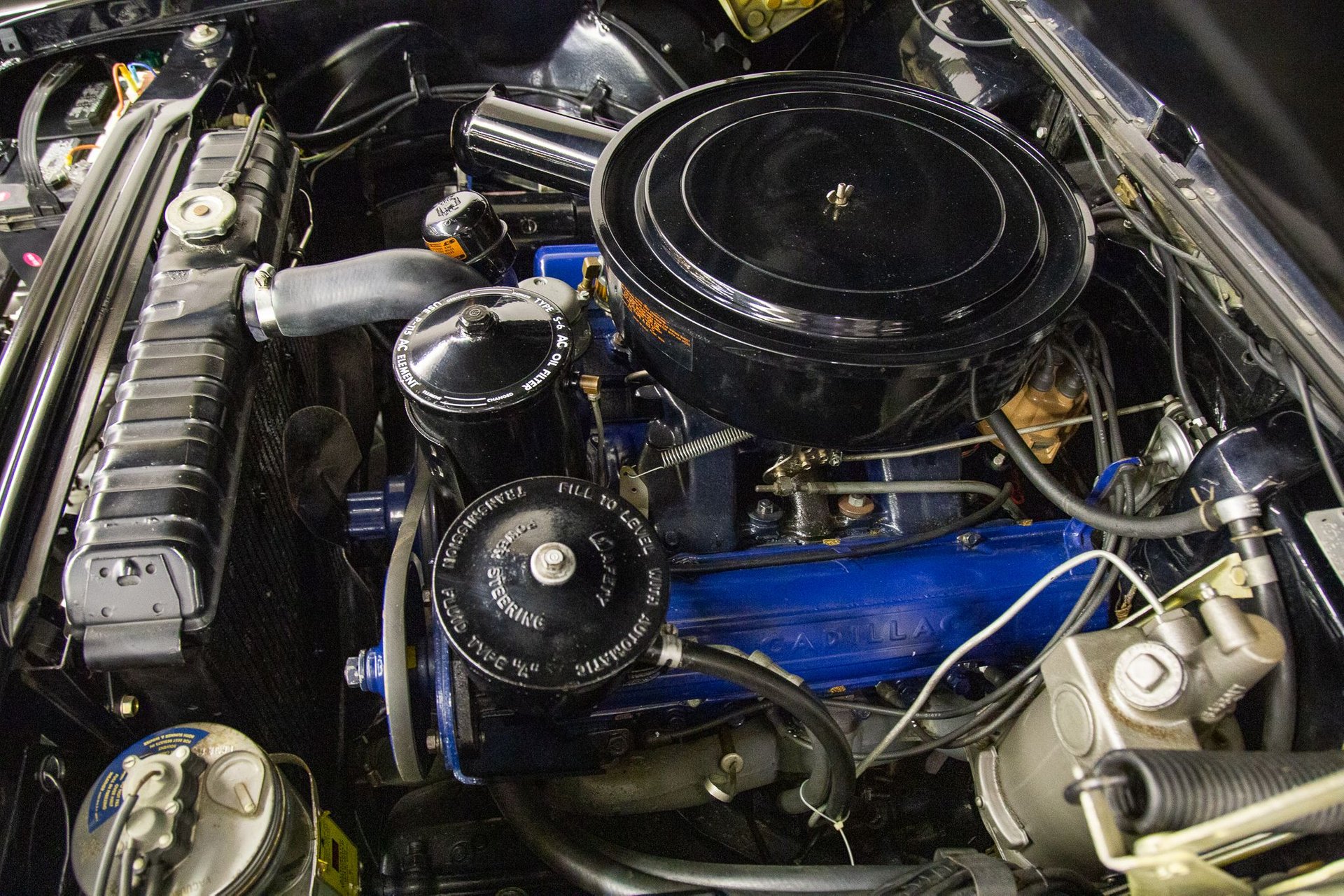
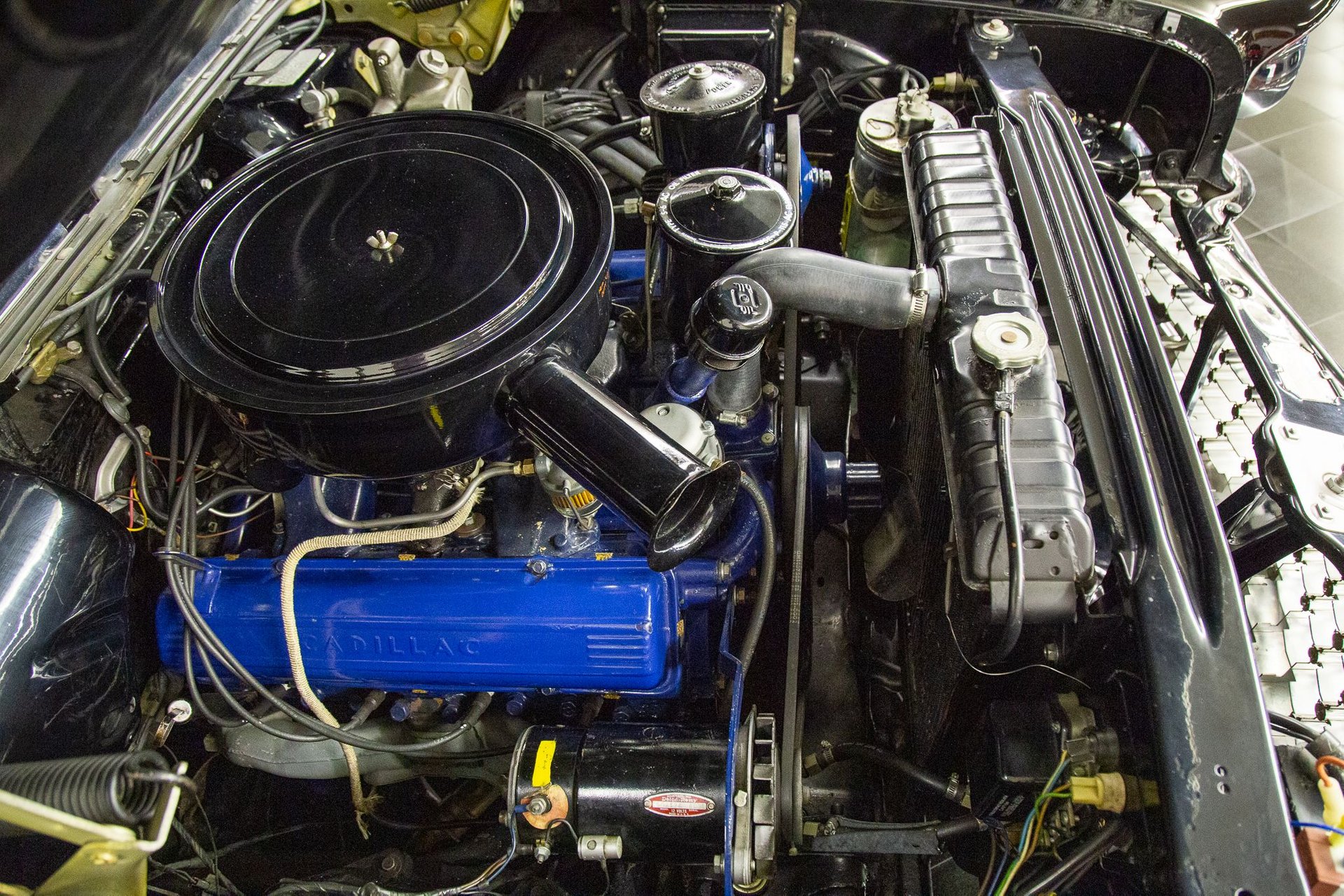
Our feature Cadillac Series 62 convertible is a multiple award winner finished in Alpine White with an Ivory power convertible top over a brilliant red leather interior. Number 2,831 of just 7,825 built for 1958, it is the recipient of a recent drivetrain restoration of its numbers-matching 365 cubic-inch V8 rated at 335 horsepower. Fuel flows to the 365 through triple Rochester carbs, and power is moved to the rear wheels by the original four-speed HydraMatic automatic transmission. The Series 62 convertible rolls on Cadillac Sabre wheels shod in Auburn Deluxe wide white radial rubber.

1958 Cadillac Series 62

1958 Cadillac Series 62

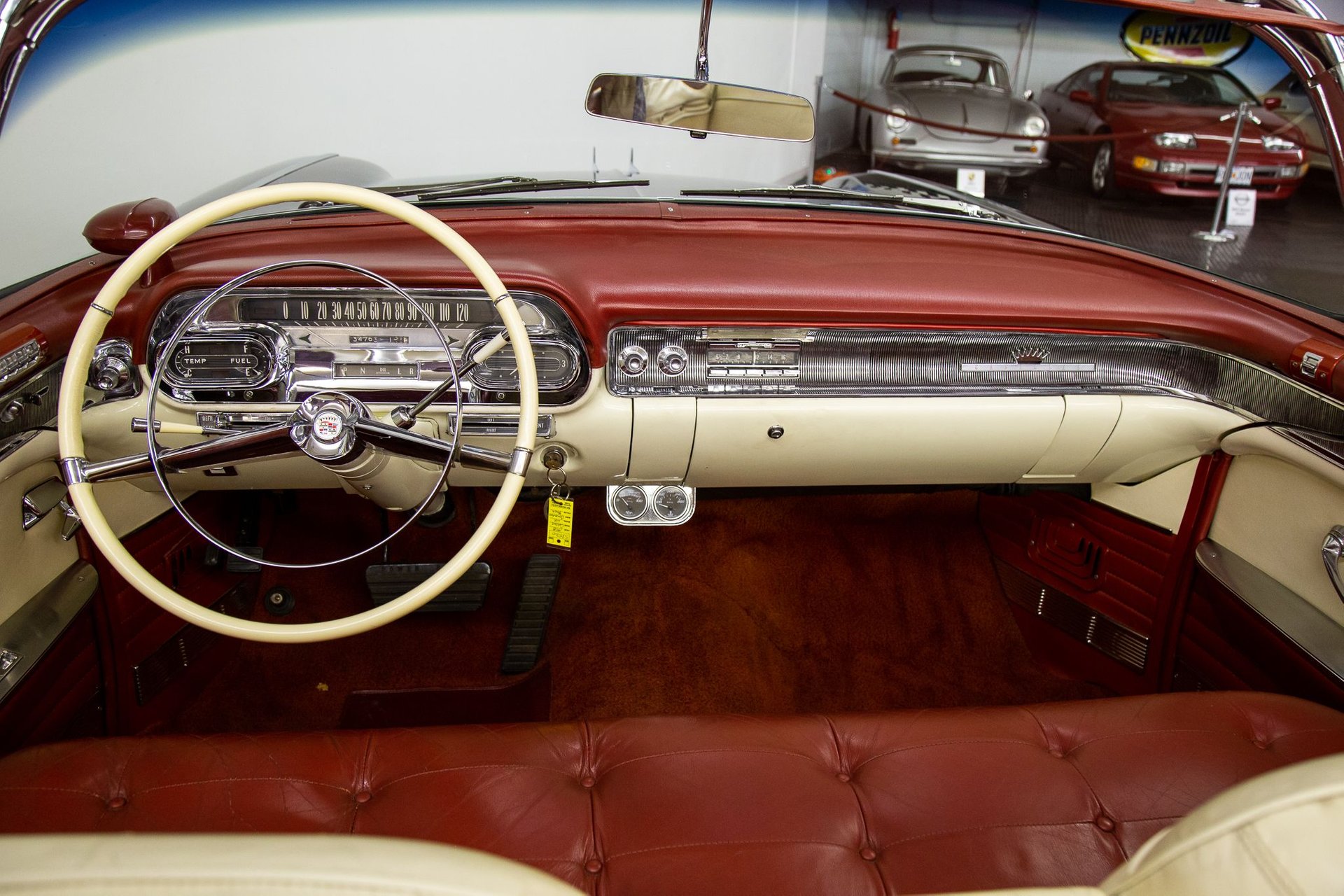
The Cadillac Series 62 is well appointed, with power steering, power brakes, power leather front bench seat, AM Wonderbar signal-seeking radio with power antenna, Autronic Eye automatic headlight dimmer, and the aforementioned power convertible top.

1958 Cadillac Series 62

1958 Cadillac Series 62

1958 Cadillac Series 62

1958 Cadillac Series 62

1958 Cadillac Series 62

1958 Cadillac Series 62

1958 Cadillac Series 62

The 1969 Plymouth Suburban's Eight-Door Wonder Awaits a Restoration Miracle

 Whenever I hear the word "suburban," I instantly think about the Chevrolet hauler. And I bet you do, too, for one simple reason. The Chevy Suburban came to be in 1934 and is still in production almost 90 years later (as of 2023). In short, it's not only a legendary forerunner to the modern SUV, but it's also the longest-running automobile nameplate in the world.


But Chevrolet is not the only carmaker that used this name. The Chrysler Corporation slapped an identical badge to not one but two vehicles. The long-defunct DeSoto brand produced the first one. Introduced in 1946, the DeSoto Suburban was a long-wheel-base four-door sedan capable of carrying eight passengers thanks to factory-installed jump seats. The model was discontinued in 1954.

Then there's the Plymouth Suburban, which arrived in 1949. Unlike DeSoto, Plymouth used the badge on a station wagon. And I bet you didn't know that it revolutionized the market as the industry's first all-steel body grocery-getter.

The original series soldiered until 1956, when Plymouth decided to group all its station wagons under a separate series. Specifically, the Suburban line included wagon variants of the Plaza, Savoy, and Belvedere.


This strategy lasted until 1961 when the nameplate was discontinued. Plymouth revived the badge in 1968, but not as a separate series. Instead, it was used to designate a station wagon version in the Fury range. The name went into the history books for good in 1978, when the Fury was retired to make way for the Gran Fury.

What's with the history lesson, you ask? Well, YouTube's "Adventures Made From Scratch" just stumbled across one of the rarest and most ridiculous Plymouth Suburbans ever built. And you have to see it because it's an eight-door behemoth with no fewer than four rows of seats.

Is it a factory model? No, coachbuilding companies like Superior Coach and Miller-Meteor handled these elongated, multi-door projects. This Suburban, on the other hand, was manufactured by Armbruster Stageway.


Mainly specializing in funeral vehicles, Armbruster also built limousine versions of various cars and SUVs, including the Chevrolet Suburban, back in the day. But the company's limos weren't open inside, providing loads of room and plush seating for two or three people.


Armbruster focused on more utilitarian stretch vehicles that could haul as many people as possible. For instance, this eight-door, four-row Mopar can seat up to 12 people. And it was most likely commissioned by a hotel that used it to haul guests to and from the airport.


Sadly, this Plymouth Suburban had a rough life once it was decommissioned. Last on the road in 2000, it spent more than two decades outside, long enough for the floor and the body to end up with rust issues.


The interior doesn't look any better either, with both the headliner and the upholstery ruined by decades of use and neglect.


The stretched wagon is based on the 1969 Fury Suburban, the first year of the fifth-generation full-size. And our host claims it's powered by a 440-cubic-inch (7.2-liter) V8, which was the Fury's range-topping mill at the time.

It wasn't quite as powerful as the four-barrel RB offered in the company's muscle cars in 1969, but it developed a healthy 350 horsepower and 490 pound-feet (664 Nm) of torque when new – enough to haul a fully-loaded limo like this at decent speeds.


Unfortunately, the Suburban is in no shape to hit public roads again. And while our host rescued it from where it's been sitting for more than 20 years, he doesn't plan to restore it. Unless someone shows up to take it a give it a new life, the eight-door Mopar will eventually end up in the crusher.

If you're a fan of rare Armbruster Stageway builds, hit the play button below and keep your fingers crossed that it doesn't end up as scrap metal.

Mustang was already Ford's superstar in 1965, especially as the 1964 1/2 model was selling like hotcakes

  Mustang was already Ford's superstar in 1965, especially as the 1964 1/2 model was selling like hotcakes, and the carmaker was prepared for the first refresh as part of the next model year.


But Thunderbird continued to be a head-turning machine, especially thanks to the more luxurious touch that it brought to the market.

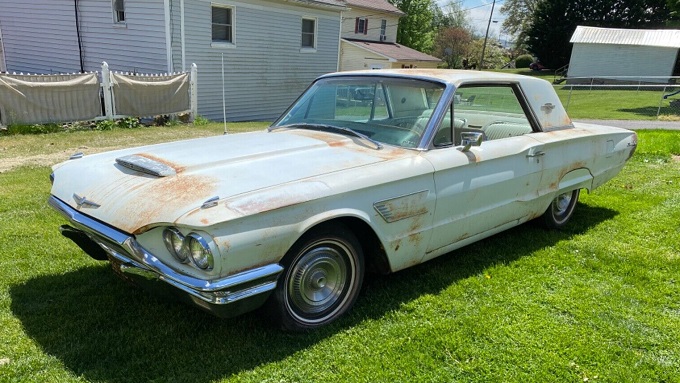
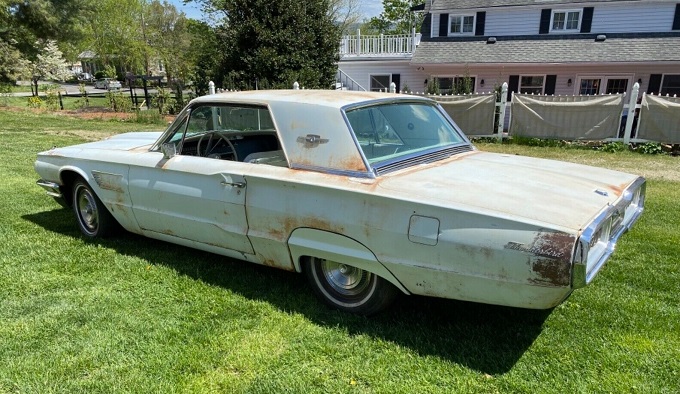
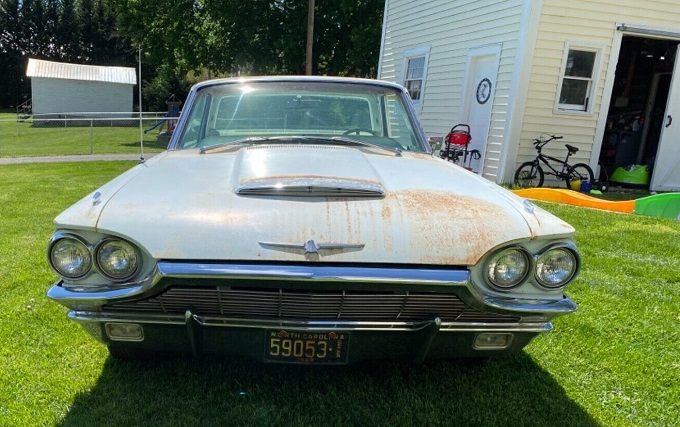
Fortunately for all car aficionados (not just for wealthy collectors), an unrestored Thunderbird is right here in front of your eyes, allowing everybody to admire a car that hasn’t received too many fixes throughout all these years.


This 1965 Ford Thunderbird was found in a carport where it's been sitting since 1988. It was discovered as part of an estate sale, and a quick inspection revealed things that you wouldn’t normally expect on a car this old.


The vehicle has never been restored, though it did receive a repaint at some point. It's unclear how professional it was, but you can always go check out the car in person before bidding online.

It exhibits occasional signs of rust, but the car doesn’t by any means look as bad as you'd expect a car sitting for close to four decades to look. The floors and the trunk have no idea what rust actually means, so at some level, this T-Bird managed to pass the test of time with flying colors.


Equipped with power steering, power brakes, and the factory AM/FM radio, this Thunderbird requires the typical refresh that a good mechanic would give to a car sitting for so long. New fluids, new brakes, and so on are a must if you want to get it back on the road.


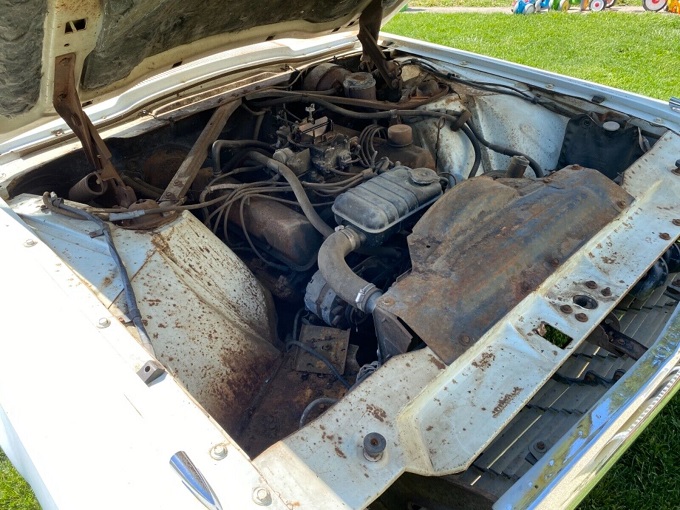
Now let's talk engines. This Thunderbird comes with a 390 under the hood, but here's the thing. The seller says they "heard" the V8 running, but it seems to work only with gas poured into the carburetor right now.


This probably means that a new tank would be required, but you can check this out in person when you see the car live. The good news is the engine is still alive, as four decades of sitting could easily lead to a powerplant getting stuck.

Given that the Thunderbird wasn’t necessarily the most successful Ford during the '60s, the car is fairly affordable, and eBay seller rpmlrls seems quite realistic. They expect to get $7,500 for this solid T-Bird, but the Make Offer button has also been enabled in case someone has another deal in mind.


At this point, the car is parked in Virginia. It comes with a lot of documentation, including inspection receipts from 1978 to 1988 before the car was eventually parked by its owner. The odometer indicates a little over 86,000 miles (close to 138,500 km).

Unveiling the Dust-Clad 1968 Mustang - The 'Magic Package' Beauty with GT Influence and Mighty Big Block

 Saving a Mustang can be a very rewarding experience, especially when the chosen project doesn’t involve a lazy six-cylinder example.


This is precisely why I think the model I recently came across on eBay is very likely to tickle everybody's fancy.

A 1968 Ford Mustang that hasn’t moved in a very long time is fighting for survival online, trying to impress with a package that you don't necessarily see too often.


As a little spoiler before jumping into more details, this Mustang was born with a big-block engine and the GT treatment, and after all these years, it continues to be complete.

Now that I probably managed to catch your attention let's see the rest of the details.

The car has been sitting in what appears to be a junkyard for a long time. Unfortunately, we're not getting much information on the car's resting place for the last decades, but the flat tires and the metal issues suggest the Mustang has been parked for quite some time.

The rust has obviously invaded the metal, but for a clearer picture of the damage it produced, you should head over to Aragon, Georgia, to check it out live.


The seller says the underside is "crusty," and to be honest, I'm not surprised. A car that's been sitting for so long typically comes with wrecked floors, and I'd personally look into the trunk as well.

As a fastback born with a big-block and the GT equipment package, this Mustang is a fascinating car. Or better said, "was" a fascinating car, as it now needs a full restoration to factory specifications.


The 390 (6.4-liter) big-block unit was the top-of-the-line engine in 1967 with 320 horsepower. It was upgraded to 325 horsepower on the 1968 model year, but this time, it was no longer the king of the castle. The R-code Mustang was fitted with a 428 (7.0-liter) Cobra Jet unit that pushed the power limit to 335 horsepower.


Unfortunately, we're not getting too much info on the current health of the engine, so make sure you ask for additional details if you're committed to a purchase.

Needless to say, an S-Code Mustang isn't something you come across too often, and I'm certain the Presidential Blue paint will look stunning if restored correctly.

Honestly, I don't think this Mustang deserves anything other than a professional restoration from someone with the risk skills and resources, as a model like this could cost a small fortune.


For now, you can get your hands on the car for $30,000. This is obviously a hefty price tag, but given it's a rare Mustang whose potential is insane, I expect the car to find a new owner by the end of June when seller hbmustangs' listing expires.
© all rights reserved
made with by templateszoo